

The answer isn't as black-and-white as you might think. After all, "modular" doesn't automatically mean "modular construction." And wood construction isn't the only path to a unique brand experience.
Below, I’ll explain the difference, clear up a common misconception, and help you determine which direction is right for your brand.
What is the difference between modular booth construction and wood construction?
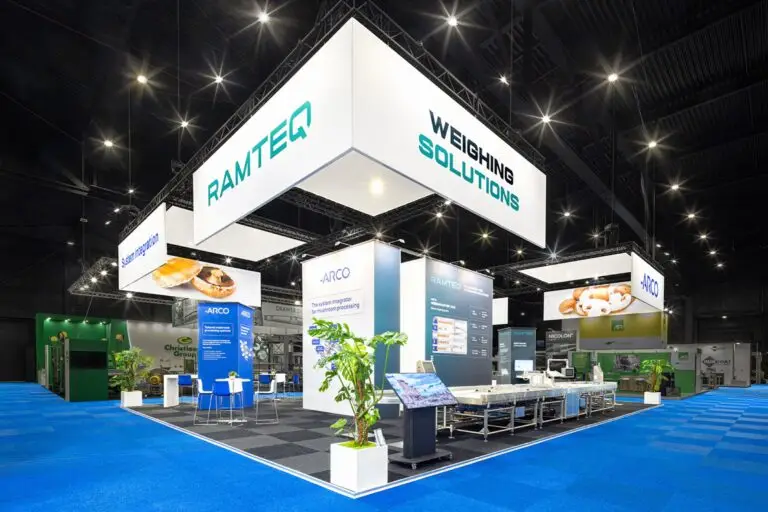
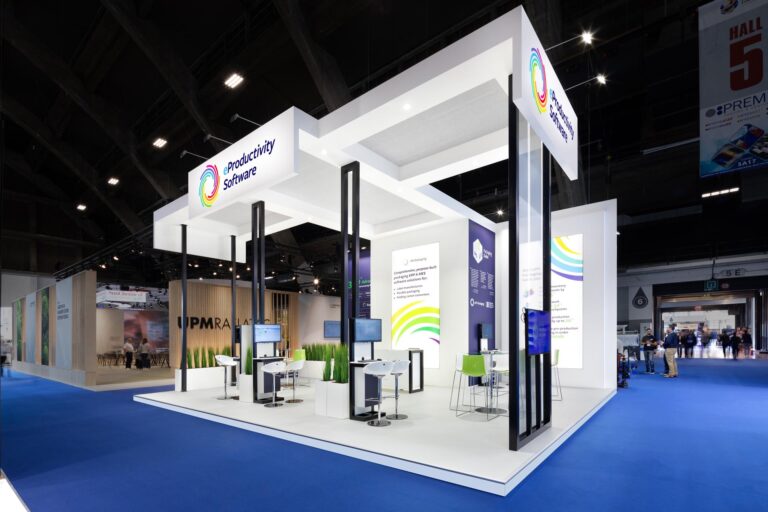
With modular booth construction, the idea is that we take into account the need for different sizes and configurations right from the design phase, without requiring major changes to the structure and while maintaining your brand’s look and feel.
Wood construction is custom-made: a unique design built specifically for a single situation. The main difference lies not in the material, but in the concept.
Because with modular booth design, you’re designing a system. The booth can expand from 12 to 30 square meters, or scale down from an international trade show to a regional event. The core remains recognizable.
And with timber construction, you design a moment: one booth, for one trade show, with complete creative freedom regarding design, materials, and spatial layout.
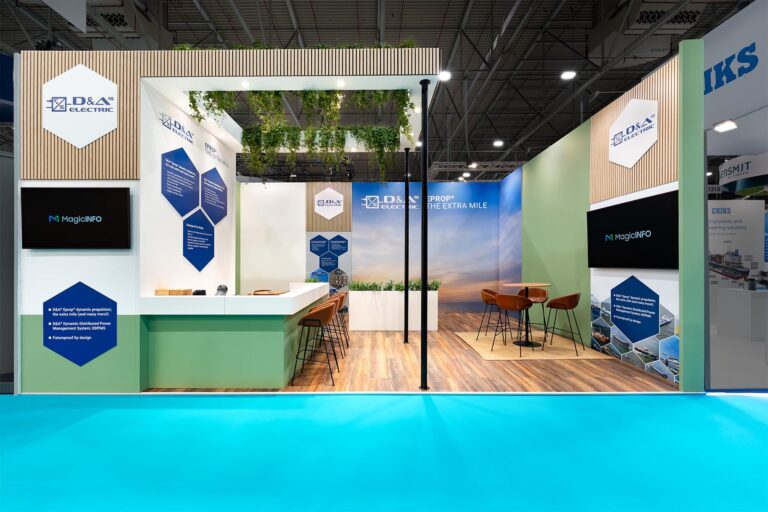
By the way, “modular” doesn’t necessarily mean aluminum frames and snap-together panels. At HEKO Projects, we build modular booths entirely out of wood for several clients. The difference lies in how you design, not in the materials you use.
When should you choose modular booth construction?
Modular booth construction is the best choice for brands that exhibit at trade shows several times a year and are seeking consistent brand visibility. By designing a scalable booth, you can save 30 to 50% on total booth costs across multiple events through reuse. Setup time is reduced to less than a day, which lowers labor costs and stress.
The Benefits at a Glance
- Scalability: One design works for a wide range of booth sizes, from 9 to 50+ square meters
- Cost-effectiveness: You'll recoup your initial investment as early as the second or third use
- Quick setup: A short setup time means lower labor costs and fewer hotel stays when participating in events abroad.
- Consistent brand image: Your brand is recognizable at every trade show, regardless of location or size
- Sustainability: Reuse reduces material waste and transportation trips
So what are the benefits of modular construction?
The value of modular booth construction extends beyond cost savings. It touches on three strategic pillars that are relevant to every marketing professional:
- Risk Mitigation
You know in advance what the booth will look like and how it will function at any size. No surprises during setup, no unforeseen construction problems. Specifically: if you use a modular booth at a trade show in Utrecht (18 m²) and three months later in Düsseldorf (36 m²), you know that both configurations have been tested and proven. That predictability provides peace of mind for your stakeholders and management. It reduces the operational risk of trade show participation to virtually zero. - Process Efficiency
Using the same design repeatedly doesn’t just save money. It also reduces lead time in briefings, design iterations, and production. Here’s a concrete example: while a new wood-frame booth might take six to eight weeks for design and production, a modular approach reduces that to two to three weeks for reconfiguration and any updates. You and your team will have the capacity to focus on what really matters at the trade show: having conversations and generating leads. - Brand Consistency as a Competitive Advantage
By appearing at every trade show with the same visual identity, you build brand recognition. Visitors who encounter you at three trade shows are more likely to remember your brand. That’s the Mere Exposure Effect in action: the more often someone sees your brand in a consistent, professional setting, the more their trust grows. After three to five touchpoints, your brand feels familiar to visitors. And familiar brands get the benefit of the doubt, especially in B2B purchasing decisions where risk aversion plays a major role.
Modular is right for you if you consistently use trade show participation as a growth channel. You don’t want to reinvent the wheel every time, but you do want to present a professional and recognizable image every time.






When should you choose custom wood construction?
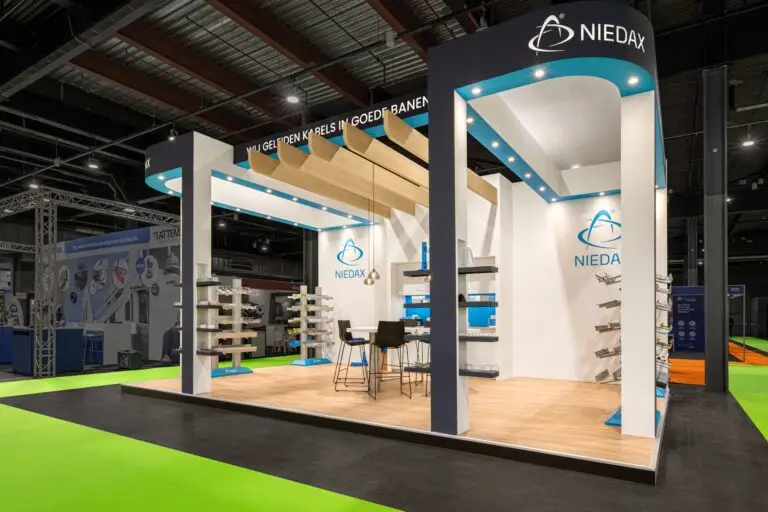
Custom wood construction offers complete control over every detail of your booth and is ideal when you want to create a single, specific moment with maximum impact. Think of a product launch where you build a fully accessible brand experience, an anniversary trade show where you translate 25 years of company history into a spatial experience, or an international trade fair where your brand makes its debut in a new market segment. You build the booth entirely around your story, without compromising on reusability.
The Benefits of Wood Construction
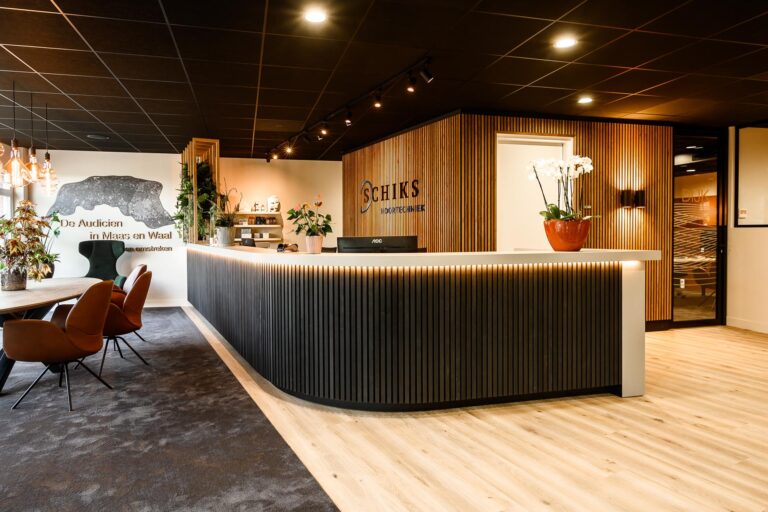
- Unlimited design freedom: Every detail is custom-made. Think of curved walls, recessed niches, integrated product display cases, or a fully custom-milled reception desk
- Maximum brand experience: The booth tells exactly the story you want to tell, down to the smallest details
- Premium look and feel: A robust, high-quality finish that positions your brand as a market leader
- Storytelling: Every square meter contributes to the brand experience you want to convey
What should you keep in mind?
Wood construction is less flexible than modular construction. That’s not a disadvantage, but a deliberate choice. It does mean, however, that you need to have a clear idea of what you want to achieve before you start.
- Modifications cost more: Changes to the stand’s dimensions require structural modifications and new production runs
- Longer setup time: Expect it to take two to five times as long as a modular booth
- Higher costs per campaign: Because you have to build everything from scratch each time, the costs per trade show are higher
- Limited reusability: Elements are difficult to use at another trade show with a different booth size
So what are the benefits of wood construction?
The strategic value of wood construction lies in its impact at every touchpoint. Three key pillars:
- Authority
A fully custom-built booth conveys that your brand invests in quality. Imagine this: your competitor is standing next to you with a standard booth, while you have a design that literally takes visitors through your production process. That visual contrast serves as social proof for potential customers and partners. The message is clear: this is a brand that goes the extra mile. In B2B, where purchasing decisions rely heavily on trust and credibility, that signal is worth its weight in gold. - Differentiation
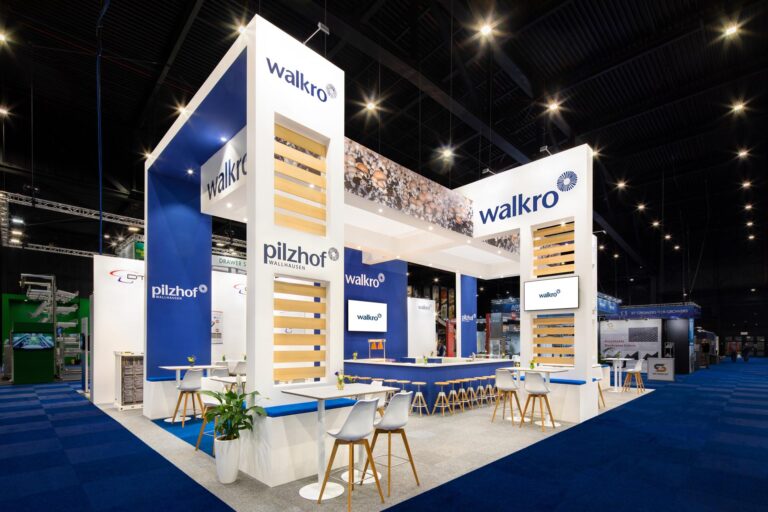
On a bustling trade show floor with hundreds of exhibitors, a unique design stands out. Wood construction makes it possible to create shapes, textures, and spaces that literally draw visitors in. Imagine a semi-open reception area with exposed wood structures that radiate warmth and craftsmanship, while the competition relies on generic prefab walls. You can feel the difference within three seconds, and those three seconds determine whether a visitor walks by or stops. - Emotional connection
A booth that’s perfect down to the last detail creates a brand experience that leaves a lasting impression. Visitors don’t remember what you said, but how your booth made them feel. That’s the Halo Effect in action: a strong first impression colors the perception of everything that follows. A conversation you have at an impressive booth automatically carries more weight than the same conversation at a bare-bones booth.
Wooden construction is right for you if you have one or two trade show events a year that need to really stand out. A moment when your brand comes to life.
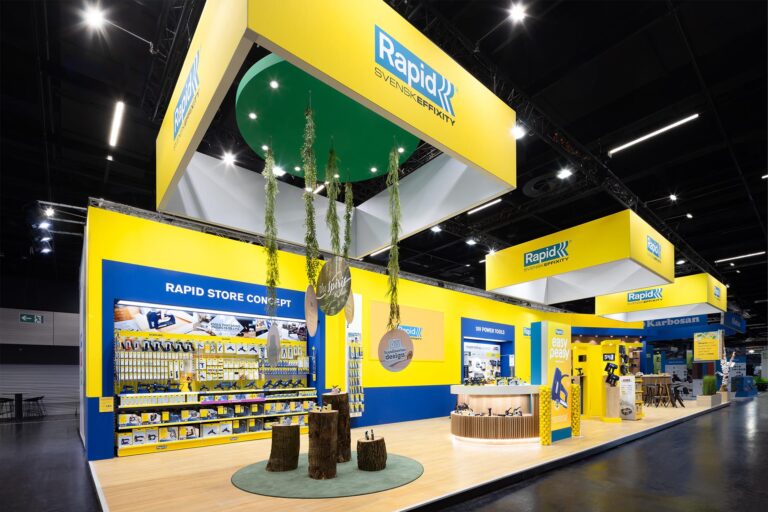
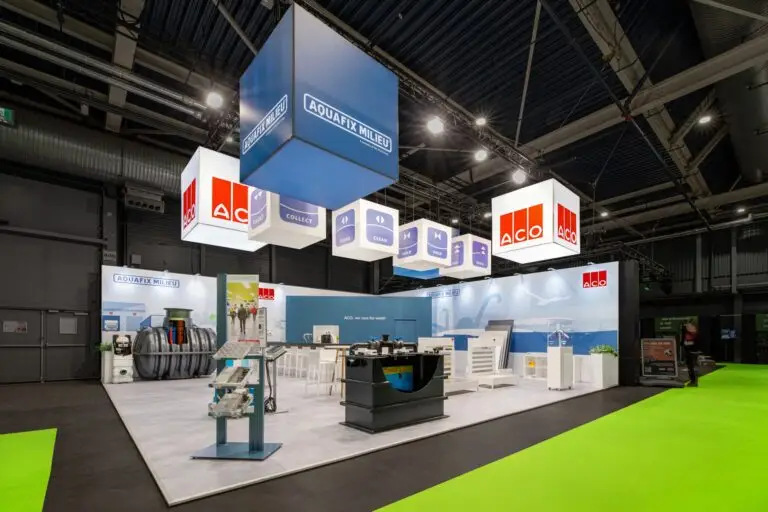
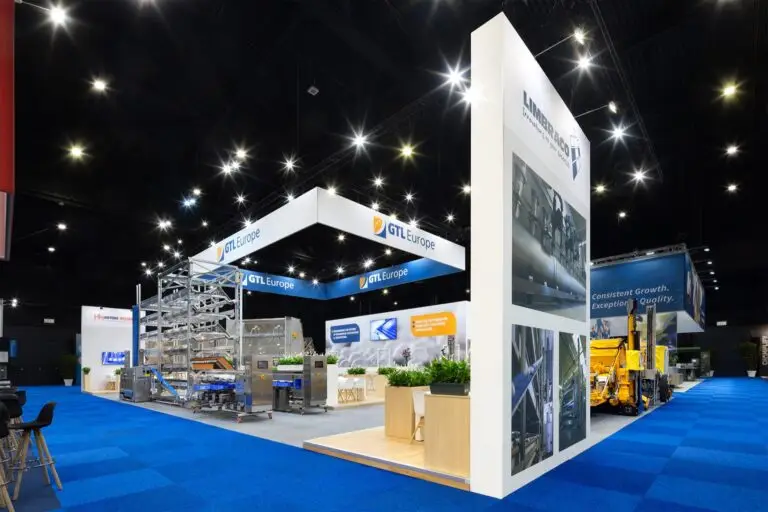

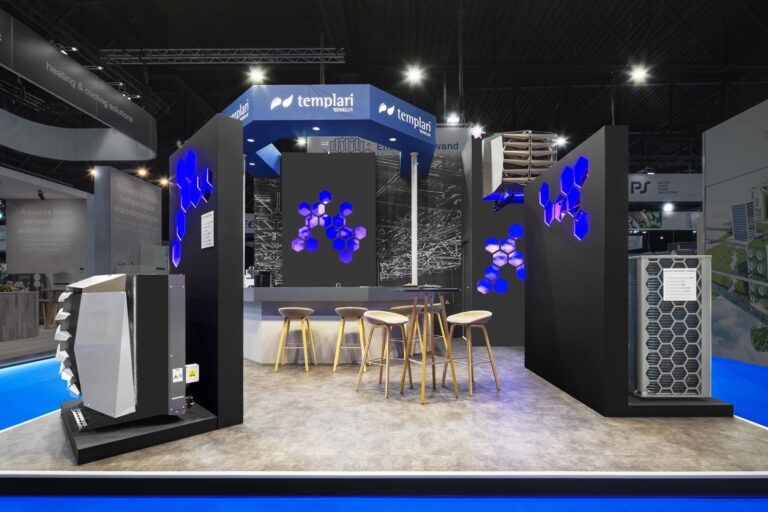

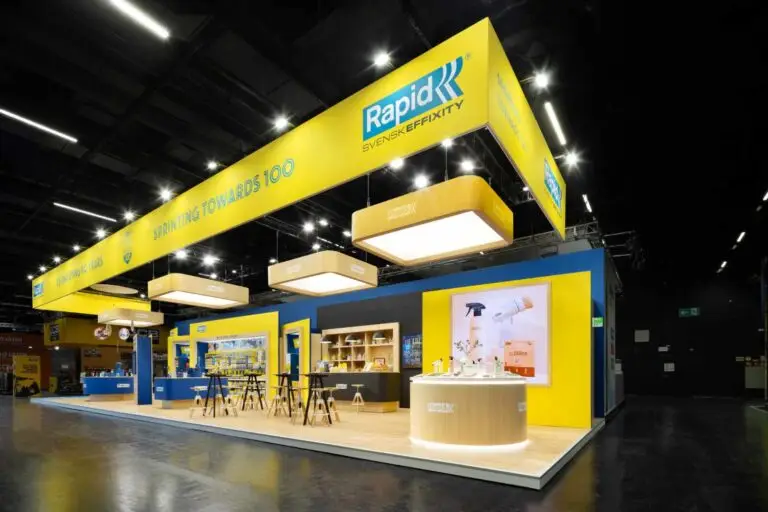

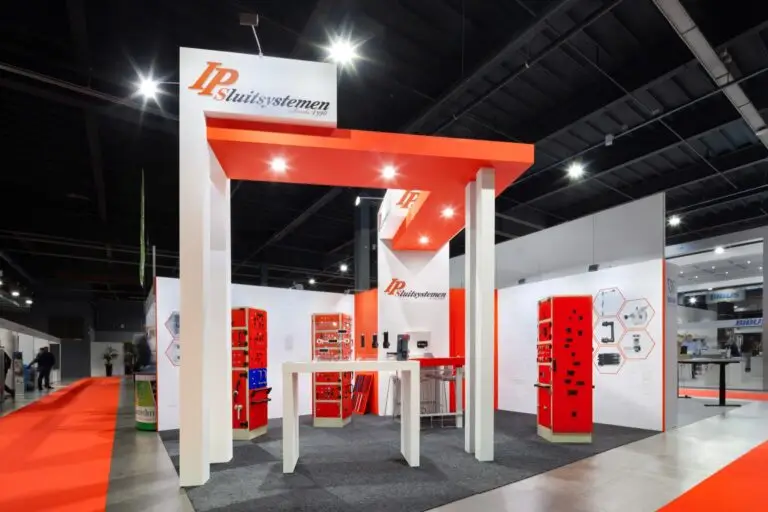

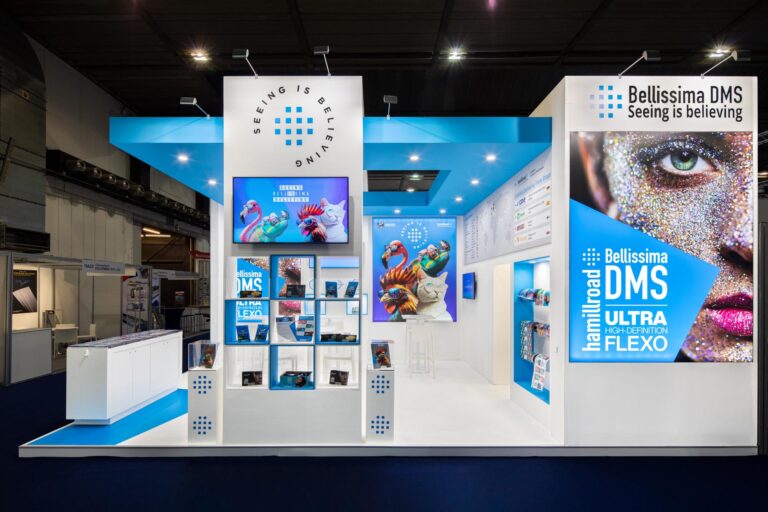
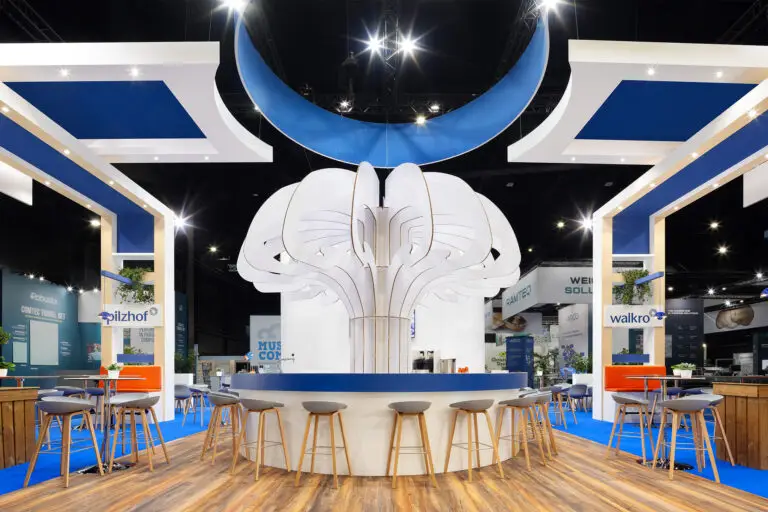



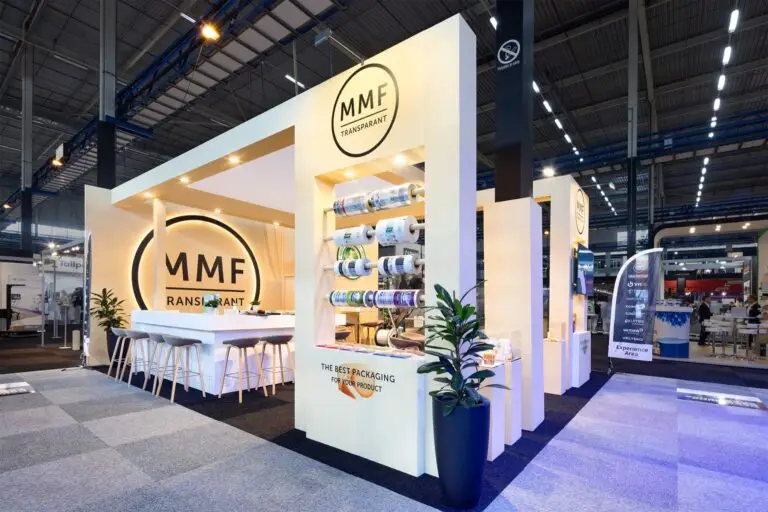



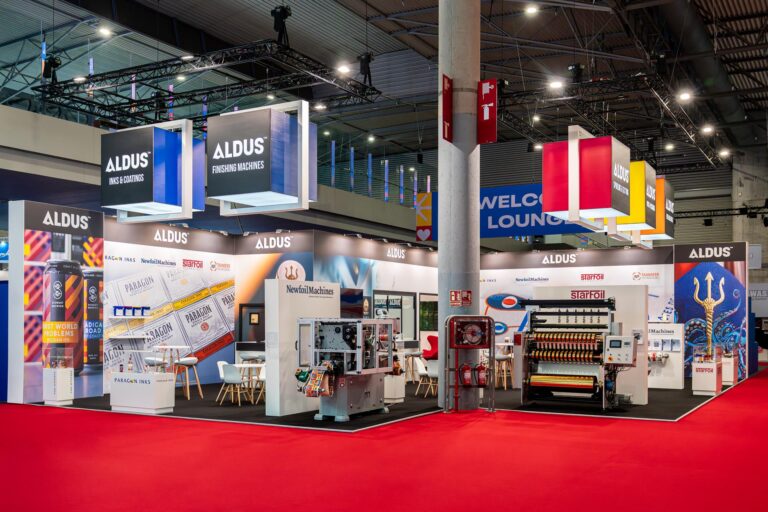
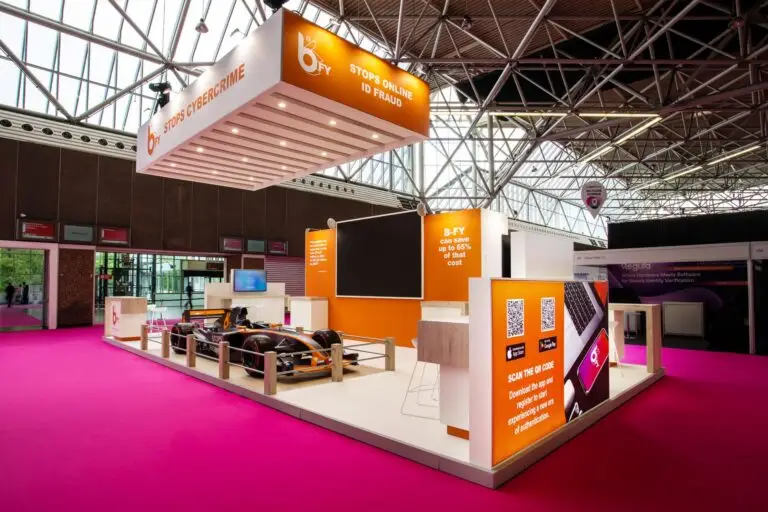
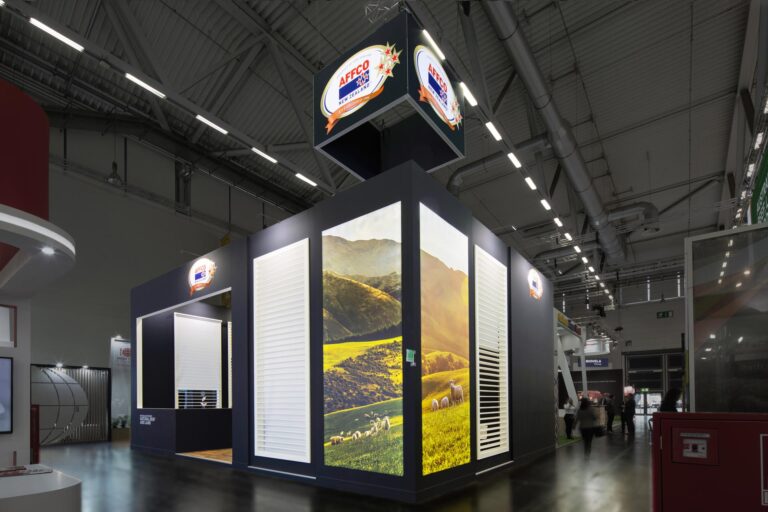




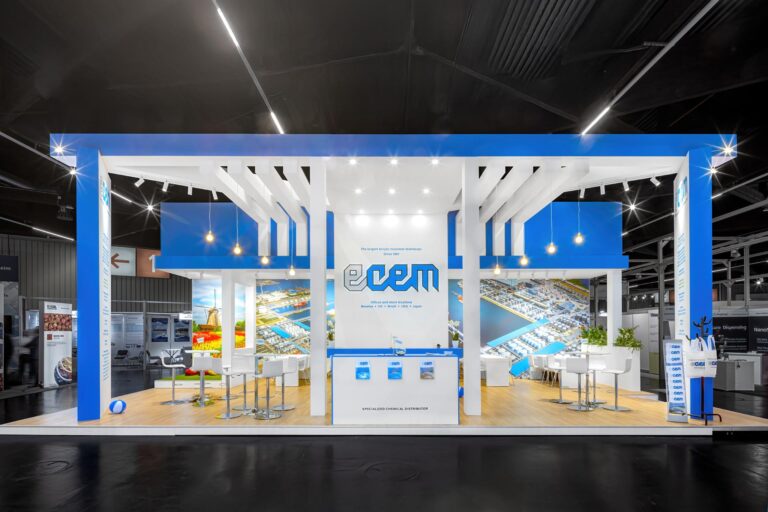
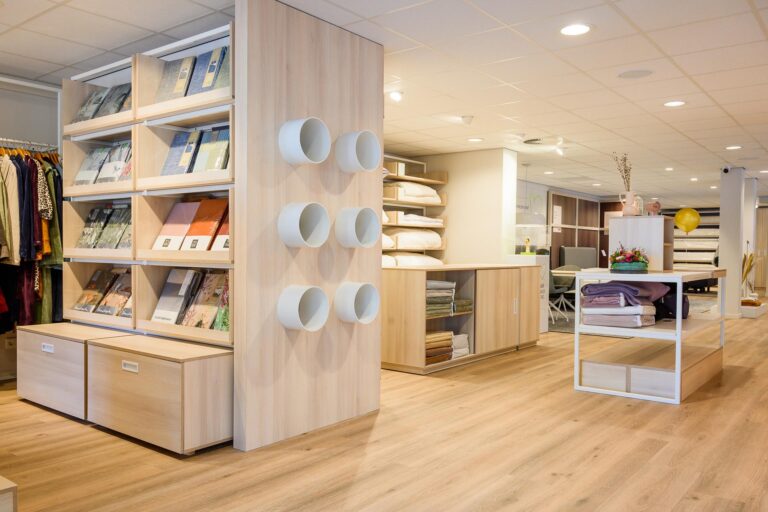
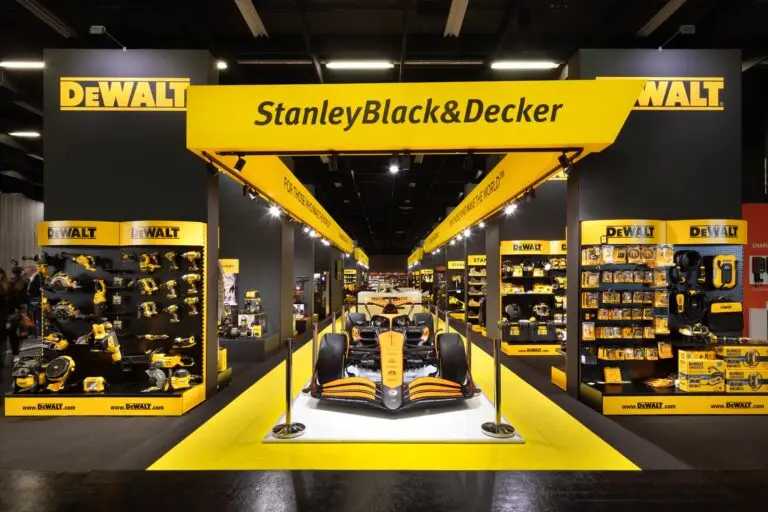
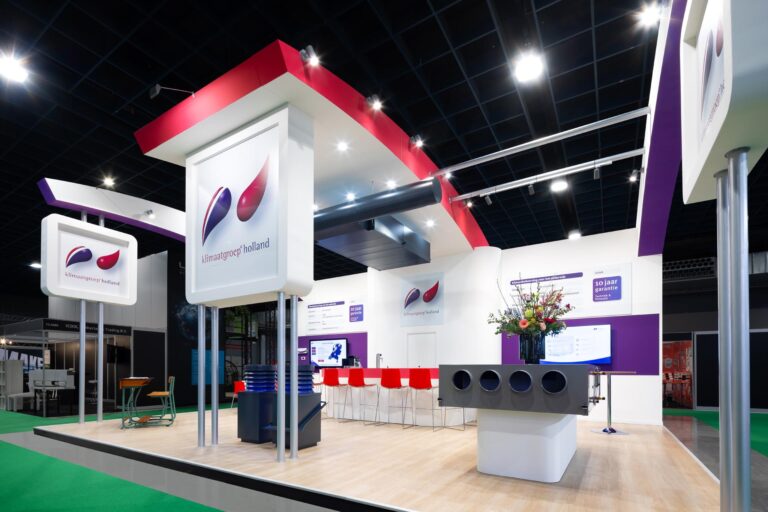
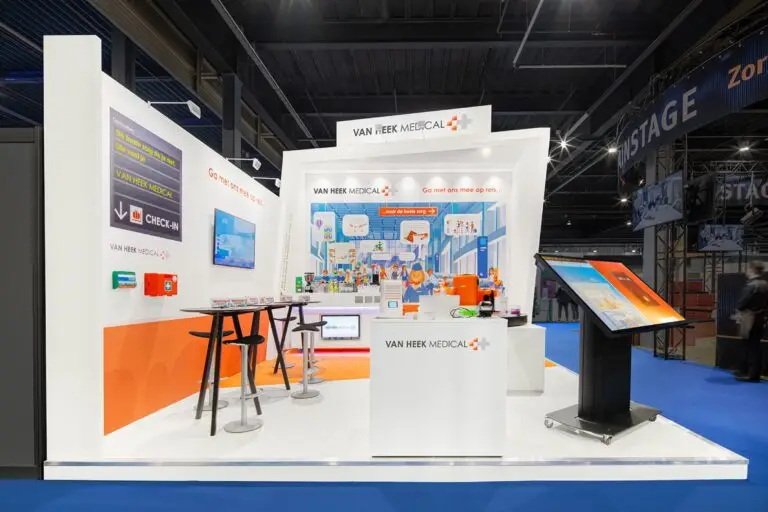
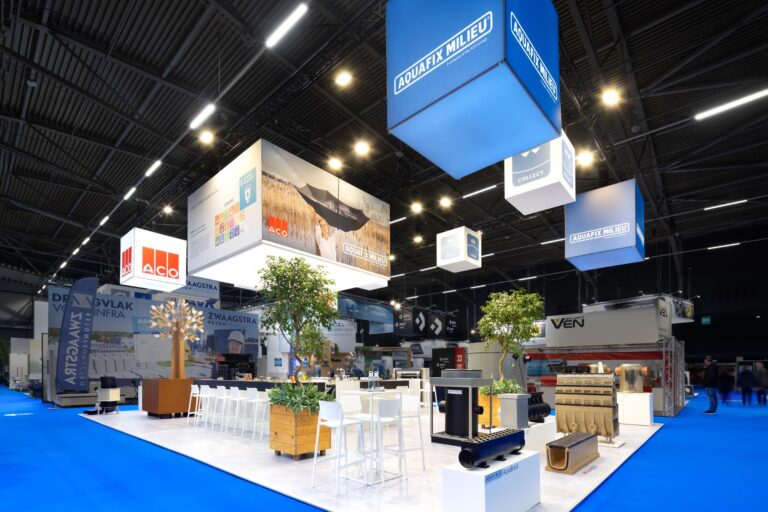
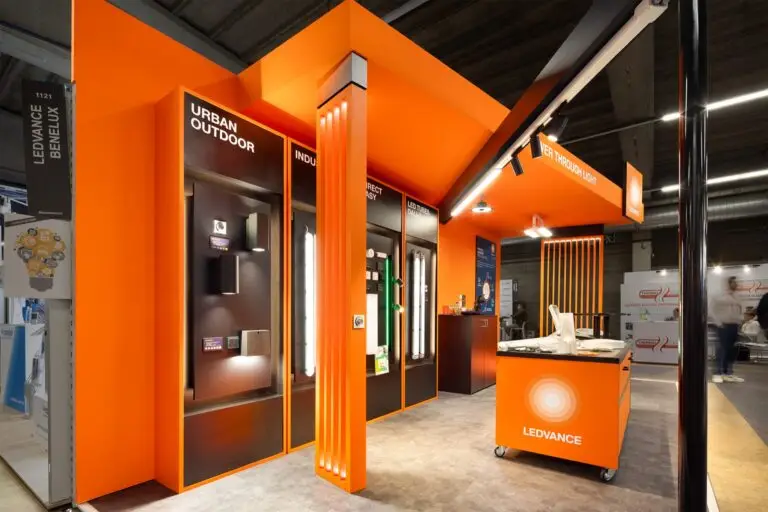
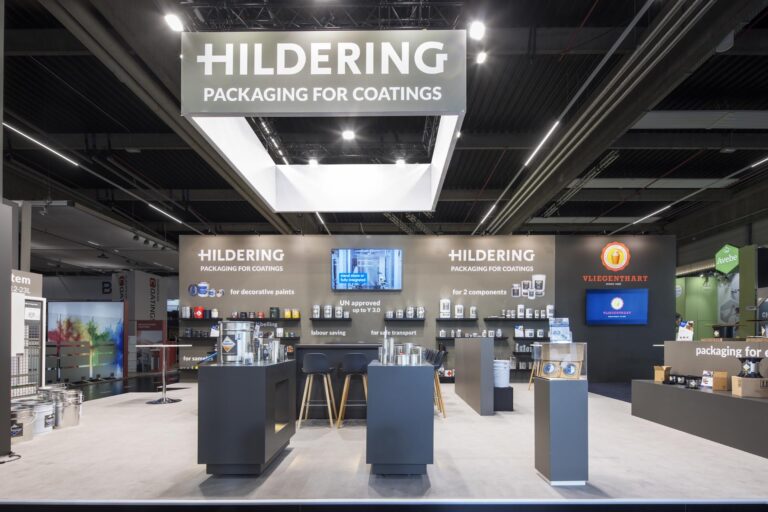
Can modular booth construction also be customized?
Yes. This is perhaps the biggest misconception in booth construction. Modular construction is often equated with system construction: aluminum profiles, standard panels, a “catalog look.”
But that's not true.
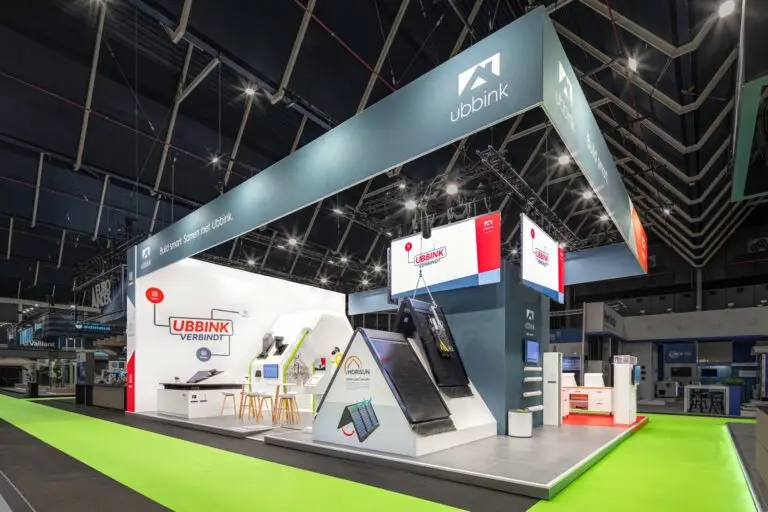
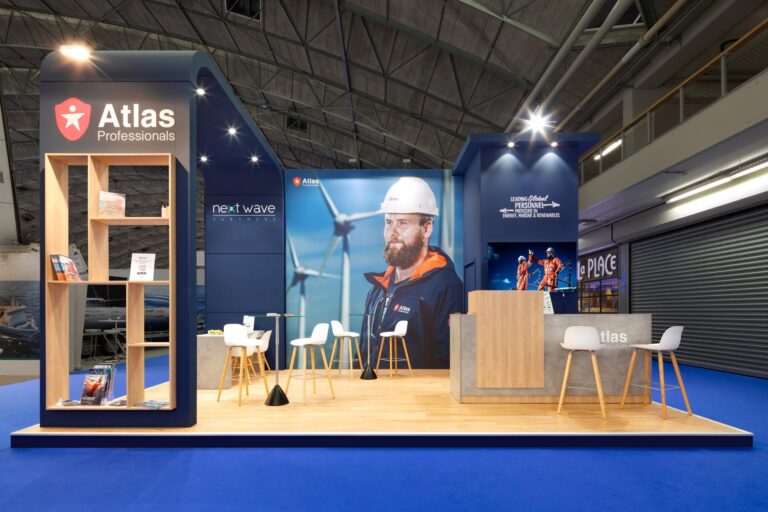
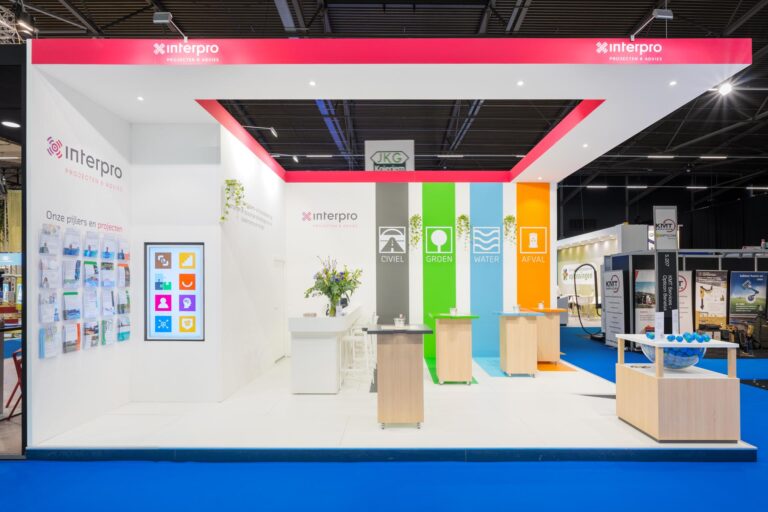
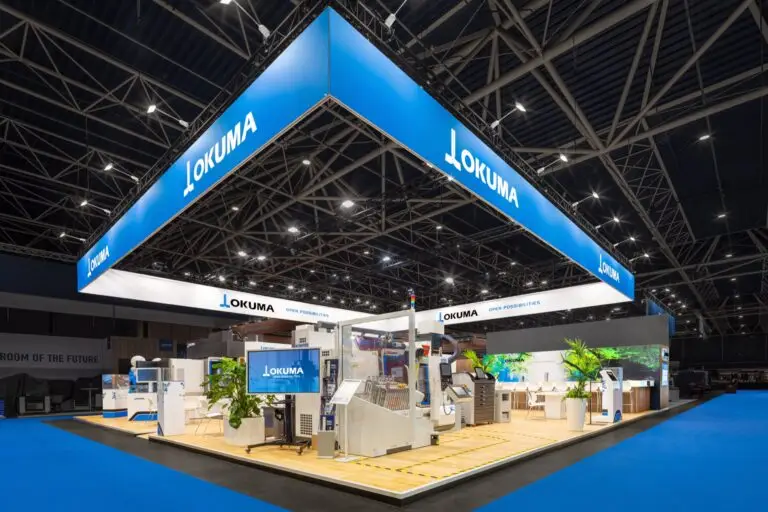
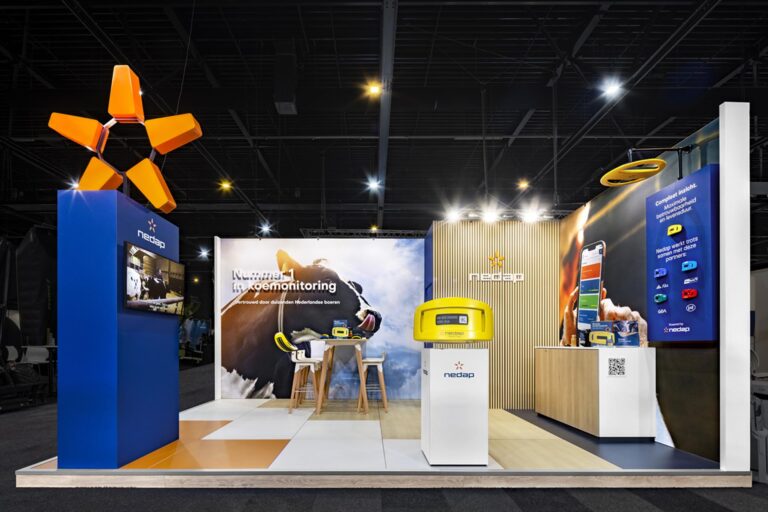
At HEKO Projects, we design fully custom modular exhibits. We use high-quality materials, including wood, and design with flexibility as our guiding principle from the very first concept.
The difference from "traditional" wood construction lies in the design phase: we plan for multiple sizes and configurations so that the booth is just right for every trade show without requiring you to invest in a completely new design each time.
How does that work in practice?
Imagine: This fall, you’ll be at an international trade show with a 40-square-meter booth. Early next year, you’ll have a regional event where you’ll have 16 square meters. And in the spring, a new trade show in Germany is on the schedule, with 28 square meters.
With a modular wooden design concept, we create a single system that works for all three of these formats. The core wall, the product display, and the conversation area remain the same. What changes are the configuration and the additional elements.
The result? A booth that evolves with your trade show planning while still being custom-designed. You get the look and feel of wood construction combined with the flexibility of a modular design. Visitors see craftsmanship and brand identity. You see an investment that pays for itself time and time again.
How much does modular booth construction cost compared to wood construction?
The initial investment for a modular booth is often comparable to that of a wooden booth. The cost difference becomes apparent when the booth is reused: modular booths save 30 to 50% over multiple uses because you reuse the same components. Shipping costs decrease by 40 to 60% because modular components are more compact.
Component | Modular Exhibition Stand Construction | Wood Construction |
Initial investment | Similar to or slightly higher than | Similar |
Costs Associated with Reuse | 30–50% savings per use | Each bet incurs comparable costs |
Setup time | In short | Long |
Shipping Costs | Lower (more compact volume) | Higher (larger volume) |
Adaptability | High without additional costs | Constructive changes are needed |
Service Life | 3–5 years, multiple exhibitions | Single-use or limited-reuse |
Sustainability | High due to reuse | Fair, unless it's bio-based material |
The rule of thumb
Do you exhibit at 3 or more trade shows per year? If so, the modular option is more cost-effective. The investment is spread across multiple events, and you’ll save on production, transportation, and setup time.
Do you have one major trade show that everything hinges on? Then the investment in a wood-framed booth will pay off in terms of impact. One standout moment that generates more leads and conversations than three “decent” booths combined.
How do you make the right choice for your brand?
The choice between modular and wood construction isn't about materials or technology. It comes down to three questions:
1. How often do you exhibit at trade shows?
Three times a year or more? Modular solutions save time, money, and stress. Once a year at a major international trade show? Wood construction delivers maximum impact.
2. How important is consistent brand recognition?
Do you want visitors to instantly recognize your brand at every trade show? Modular design builds brand recognition across multiple touchpoints. Do you want to surprise visitors every time with something completely new? Wood construction gives you that freedom.
3. What are your goals for the next three years?
Are you expanding to more trade shows, more countries, and more touchpoints? Then a modular concept is an investment that grows with you. Do you focus on one strategic event per year? Then wood construction is the right choice.
The Right Choice in Three Steps:
- Determine the frequency and scope of your scholarship. How many trade shows are planned for the next two years? Do you expect growth in terms of number or scale?
- Define your brand objective for each trade show. Is the goal to build brand awareness (modular design enhances recognition) or to make the biggest possible impact at a single moment (wooden construction enhances the experience)?
- Weigh flexibility against freedom. Do you need booths in varying sizes? Then a modular design is the safe choice. Do you need a single fixed format and maximum creative freedom? Then a wooden structure is the strongest option.
At HEKO Projects, we help you weigh these options. Not by steering the conversation toward a single solution, but by translating your brand identity, target audience, and trade show goals into the concept that works best.
Sometimes it’s entirely modular. Sometimes it’s entirely wood-based. And sometimes it’s a modular concept built with wood that combines the best of both worlds.