


Trade show organizers are imposing increasingly strict requirements regarding the use of materials and waste reduction. At the same time, visitors are also increasingly evaluating brands based on how they approach sustainability. Plus, your colleagues expect that participating in trade shows will make a measurable contribution to the business.
In this checklist, I walk you through every aspect of sustainable booth design: from LED lighting and recycled carpet to modular structures and smart logistics.
Why Sustainable Booth Design Will Be a Must in 2026
Sustainable exhibition stand construction involves designing, building, and setting up exhibition stands with minimal environmental impact and maximum reusability. Examples include FSC-certified plywood, PET-recycled carpet tiles, energy-efficient LED lighting, and modular structures.
In fact, by 2026, the European EPBD regulations will set stricter energy standards, trade show organizers will require mandatory waste separation, and an increasing number of venues will restrict the use of disposable materials.
Sustainable construction is therefore no longer just a trend—you could say it’s a prerequisite for staying competitive. But sustainability goes beyond regulations. For brands that use trade shows as a growth channel, three factors make sustainable booth design indispensable.
1. Credibility with Your Target Audience
80% of exhibitors now prioritize reusable, low-impact materials. If your booth visibly lags behind in this regard, it will raise questions among the very visitors you want to attract.
When a visitor walks into your booth and immediately sees that you’re using recognizable sustainable materials (recycled carpet, LED lighting, FSC-certified wood), it subconsciously sends a positive signal about quality right away. That impression then shapes the entire conversation: your conversation partner perceives your brand as more professional, more reliable, and more forward-thinking.
For marketing managers who are held accountable for their trade show performance, the immediate benefit is that you don’t have to back up your sustainability claims with words, but with verifiable certifications such as FSC and Cradle-to-Cradle.
2. Lower costs per trade
Sustainable booth construction can reduce costs by up to 30% thanks to modular design and reuse. You invest more in quality and less in disposable components. You’ll recoup that investment after two to three trade shows.
How does it work? A modular booth featuring reusable aluminum profiles, interchangeable fabric graphics, and carpet tiles made from recycled PET costs about 10 to 20% more upfront than a traditional setup.
But you reuse the same elements at every trade show.
The carpet tiles will last for 10+ events, you’ll recoup the cost of LED frames after 2 to 3 trade shows, and you’ll save on production costs because, for each subsequent trade show, you’ll only need to update the graphics and configuration—not the entire structure.
3. Less risk, more control
Modular, reusable booths reduce your reliance on last-minute production. You know exactly which parts are available, what condition they're in, and how to combine them.
This brings peace of mind to the planning process and prevents surprises right before the trade show.
Besides, it also saves a lot of stress, because any uncertainty about materials, delivery times, quality, and so on, just leads to extra work and questions that you could do without.
A sustainable, modular approach eliminates that uncertainty. You work with familiar materials, proven structures, and a predefined reuse plan. That gives you—as a marketing manager or owner—the control you need to focus on what really matters: having conversations and generating leads.
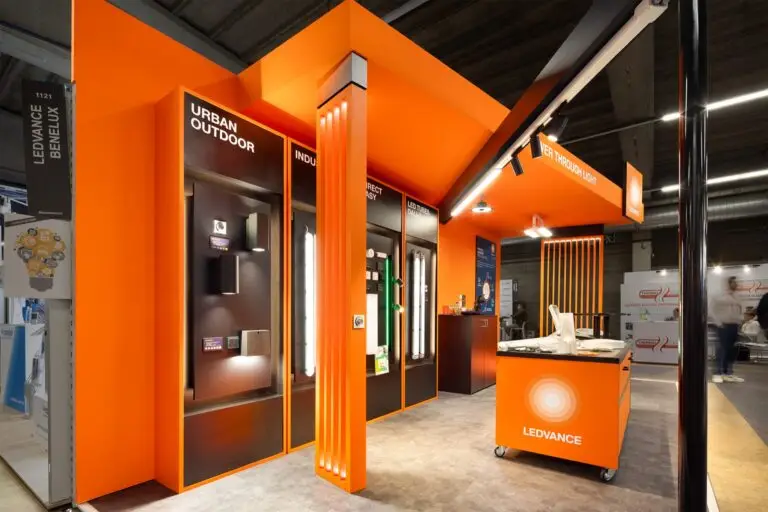
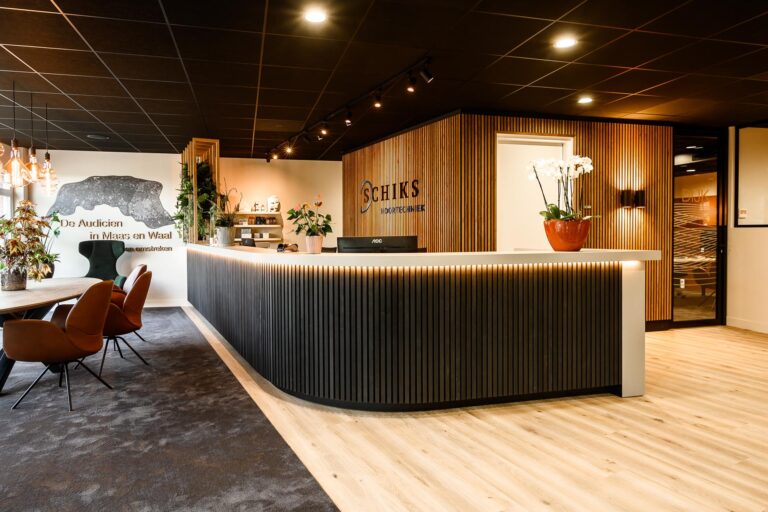
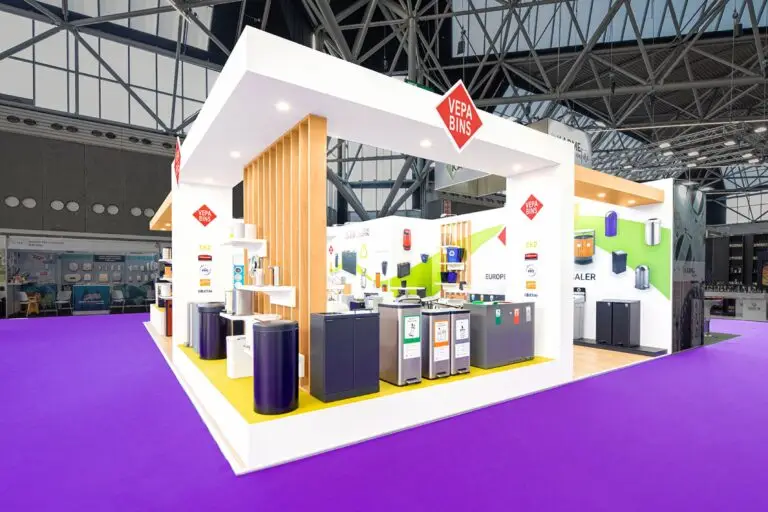

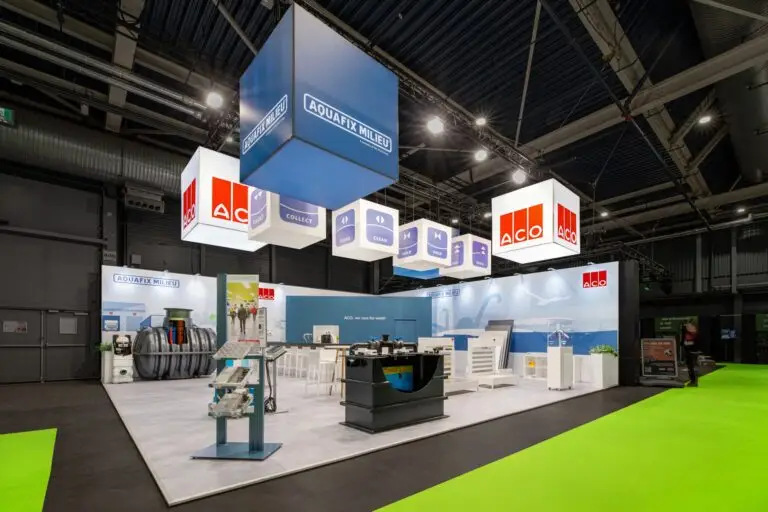

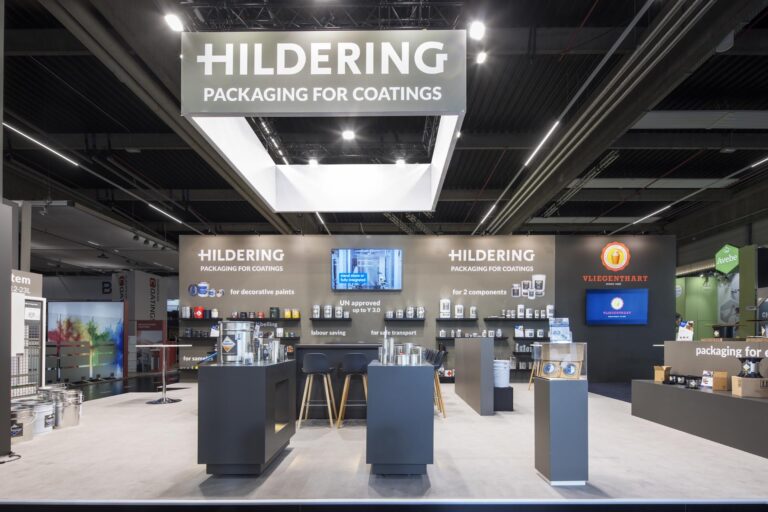
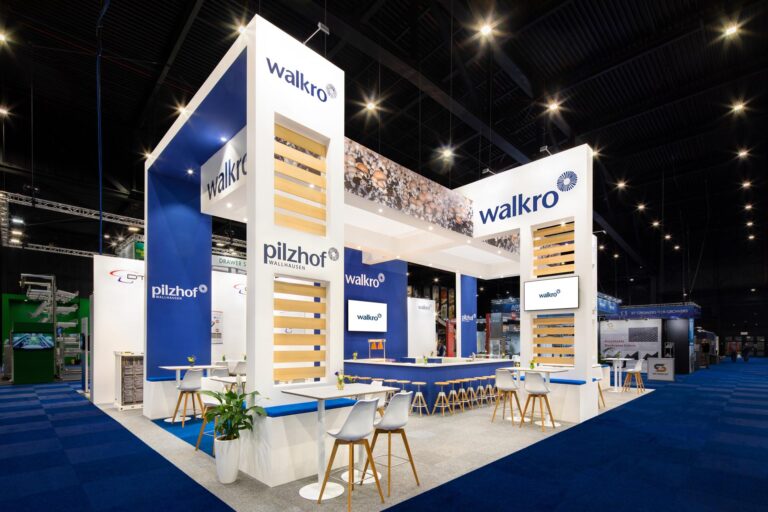

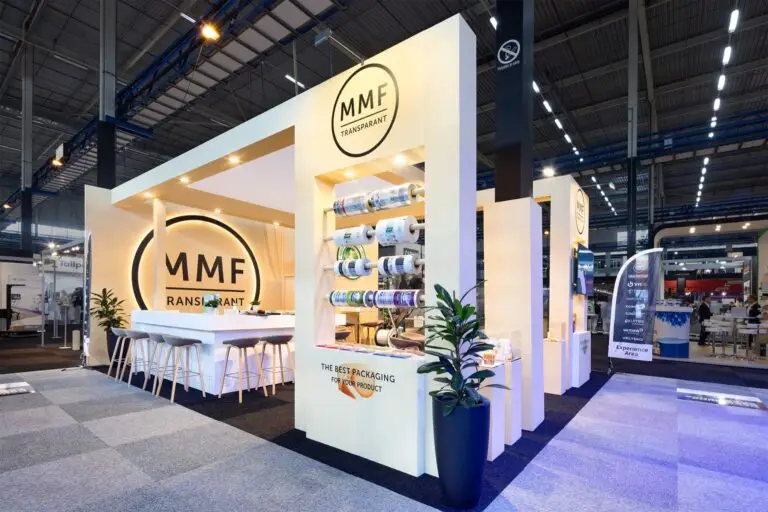
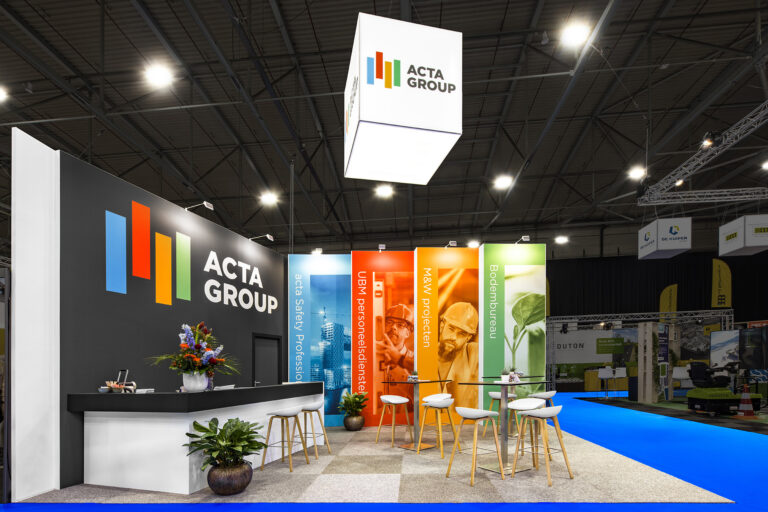

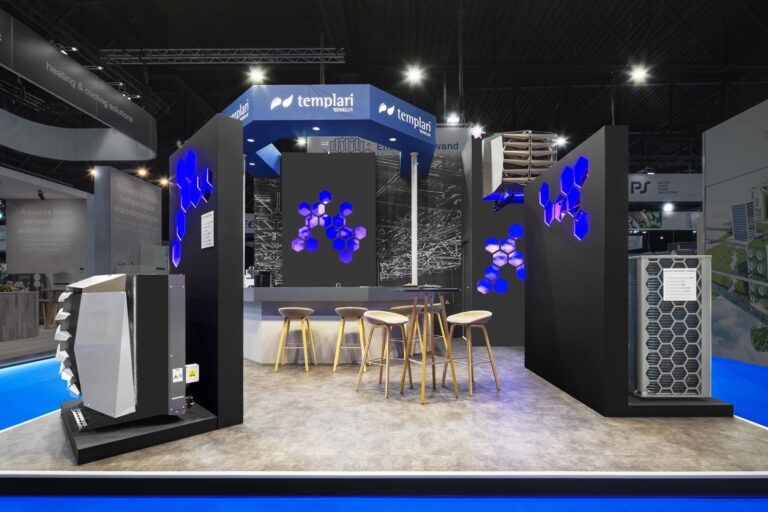

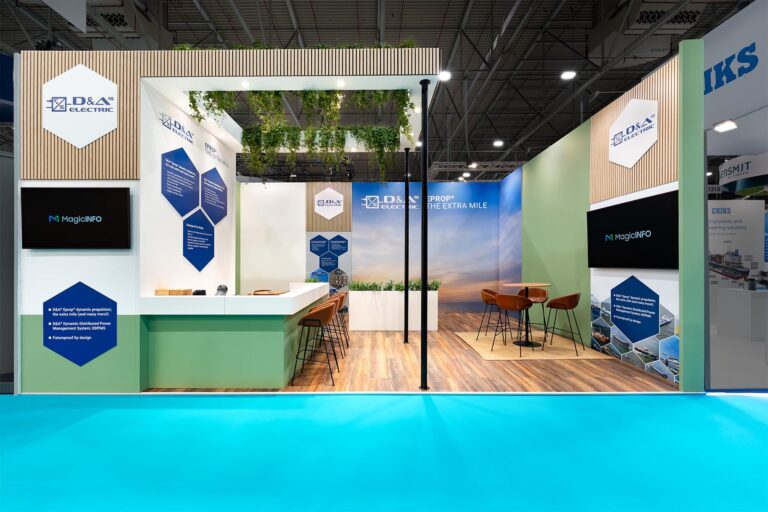
What are the best sustainable materials for a trade show booth?
The best sustainable materials for booth construction are FSC-certified plywood for structures, reusable aluminum for frames, PET-recycled carpet tiles for flooring, and LED lighting for all light fixtures.
These materials combine a low environmental impact with high reusability and a professional appearance. Below are the three main material categories, along with specific product names and figures.
Wood and Construction Materials
- FSC-certified wood guarantees that the wood comes from responsibly managed forests. It is stronger and more durable than particleboard and is ideal for reuse across multiple trade shows.
- Reusable aluminum profiles form the basis for modular frames. Aluminum is fully recyclable without any loss of quality and retains its structural strength from trade show to trade show.
Flooring
- PET-recycled carpet tiles (such as Desso EcoBase or Tarkett) contain up to 100% recycled yarns and are Cradle-to-Cradle certified.
- Modular tiles are quicker to set up and take down than roll-out carpet. They can last for 10+ events if stored properly.
- Life-cycle costs are 50% lower than those of virgin materials.
- Choose click systems or loose-lay tiles instead of glued flooring. This speeds up installation and prevents adhesive residue.
Textiles and Graphics
- Choose printable textiles made from recycled polyester. The quality and appearance are indistinguishable from those of new textiles.
- Use water-based inks instead of solvent-based inks. It's better for the environment and for the air quality at your booth.
- Textile frames allow you to change graphics without replacing the frame: less waste and lower costs per trade show.
How Do You Make a Trade Show Booth Sustainable? The Checklist
A sustainable trade show booth starts with the design and ends with storage after the event. Use this checklist as an action plan: go through each item during your first meeting with your booth builder and check off what you’ve covered.
The more factors you take into account during the design phase, the fewer repairs or replacements you’ll need to make later on. The checklist is divided into four categories: lighting, flooring, construction, and logistics.
Lighting: LED as standard
LED lighting saves up to 80% in energy compared to halogen and has a lifespan of more than 50,000 operating hours.
For trade show booth construction, it’s the only logical choice, both financially and in terms of environmental impact. By 2026, 70% of trade show booths will use dimmable LED systems.
Your lighting checklist:
- Replace all halogen and fluorescent lighting with LED lighting
- Use dimmable LEDs with IoT control (app or sensor) for 40% additional energy savings
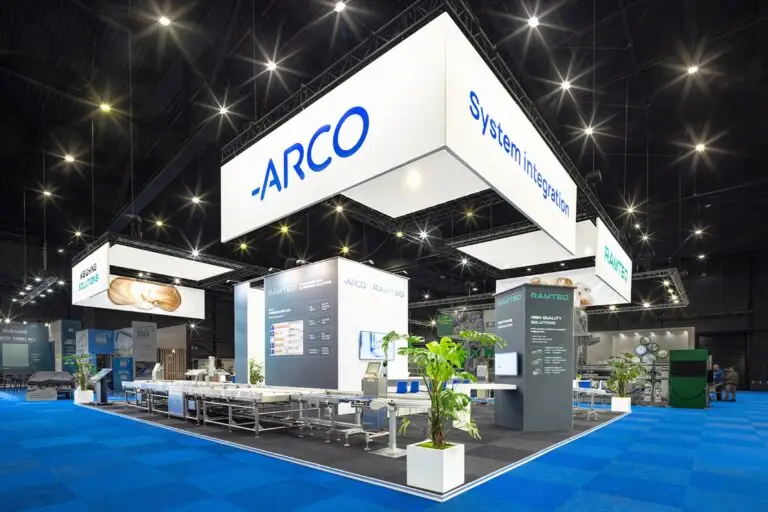
- Choose LED frames to create eye-catching displays: they deliver twice the visual impact in dark exhibition halls
- Work with layered lighting: combine general lighting, accent lighting, and mood lighting
- Choose warm white LED (2200K–2700K) for a natural, inviting atmosphere that encourages visitors to stay longer
- Ensure that all LED fixtures are reusable and recyclable
- Consider track lighting for flexibility: you can adjust the layout for each trade show without needing new fixtures
What are the benefits? They pay for themselves after 2 to 3 events through reuse. Your booth attracts more attention, your energy costs go down, and your construction costs become more predictable for each trade show. For brands that attend three or more trade shows a year, this is one of the fastest ways to save money in the entire booth construction budget.
Flooring: recycled carpet and modular tiles
The floor of your booth covers the largest visible surface area. By 2026, 60% of trade show booths will use recycled carpet as their standard flooring solution.
Your checklist for the floor:
- Choose PET-recycled carpet tiles (Desso EcoBase or Tarkett) with Cradle-to-Cradle certification
- Use modular tiles for quick installation and removal: up to 90% less new material required
- Store carpet tiles in a clean, dry place between trade shows: they’ll last for 10+ events
- Avoid glued flooring: opt for click systems or loose tiles
- Ask your booth builder for a floor plan that works for multiple booth sizes
Construction: reusable materials and modular design
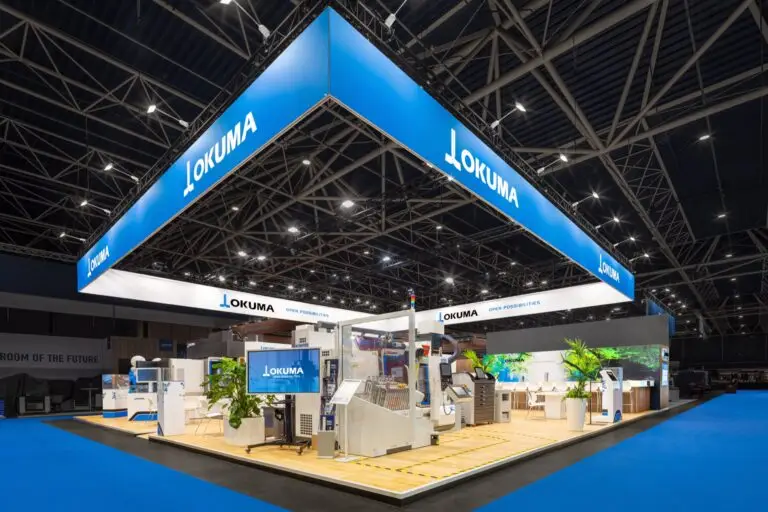
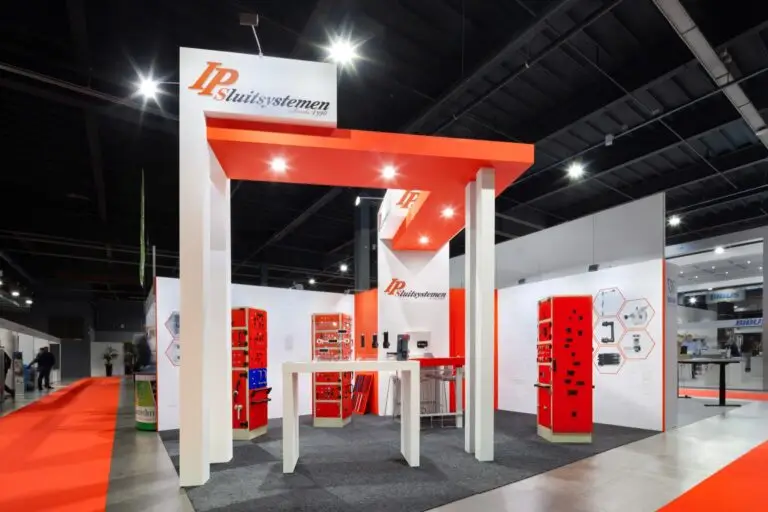
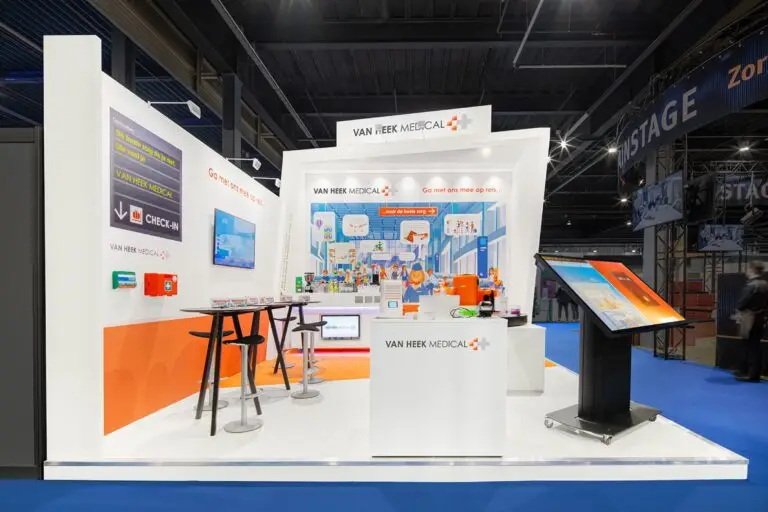
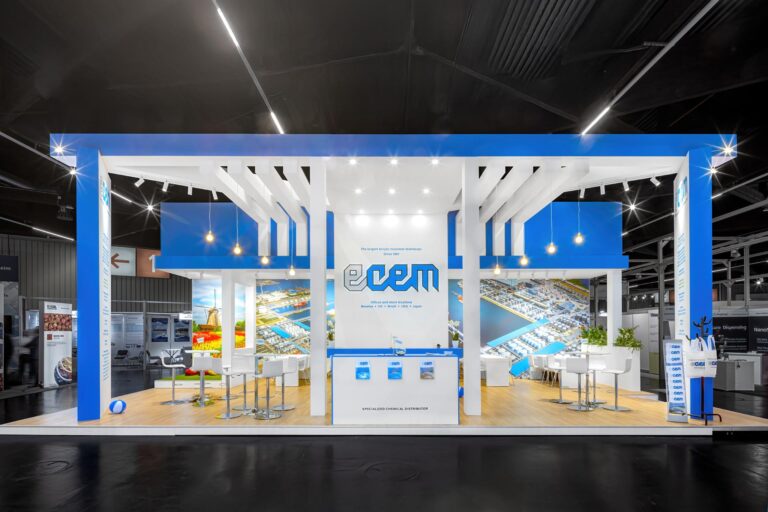
A booth that you can take apart, store, and reassemble in a different configuration saves materials, money, and time.
Your checklist for construction:
- Design the booth to be modular: individual elements that you can combine differently for each trade show
- Use FSC-certified wood and reusable aluminum profiles
- Opt for tool-less connections whenever possible: faster assembly, less damage during disassembly
- Avoid one-time spray coatings: opt for interchangeable panels or wraps
- Use water-based paints and adhesives
- Make sure each part is labeled for efficient storage and reassembly
Logistics: transportation, storage, and reuse
Even the most sustainable booth is worthless if you throw it away after just one trade show. The logistics chain is what truly distinguishes a booth that looks sustainable from one that actually is sustainable.
Your logistics checklist:
- Plan your transportation efficiently: combine booths if you have multiple trade shows in quick succession
- Choose a booth builder with its own storage facility: your booth will be kept safe and dry
- Create a reuse plan before the first construction phase: Which elements are universal, and which are specific to the fair?
- Record the condition of each component after dismantling: avoid surprises at the next trade show
- Calculate the CO₂ impact of transportation and look for ways to optimize logistics (fewer trips, shorter routes)
- Keep all certifications and documentation: you’ll build a sustainability portfolio that you’ll share with stakeholders


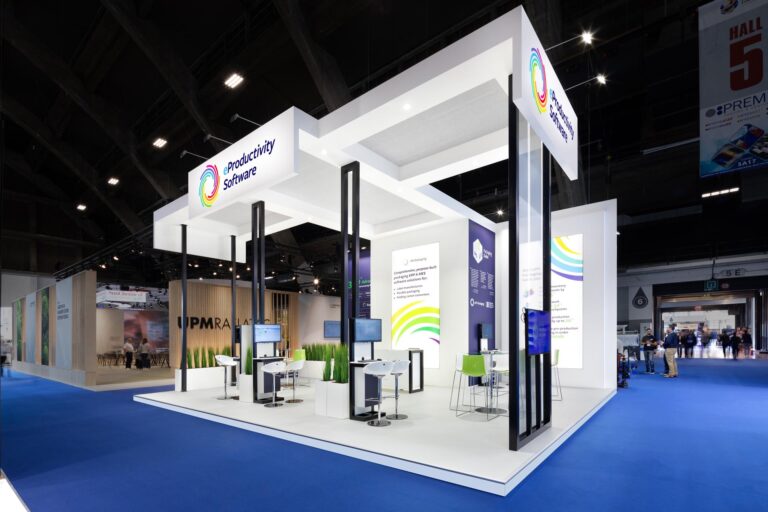


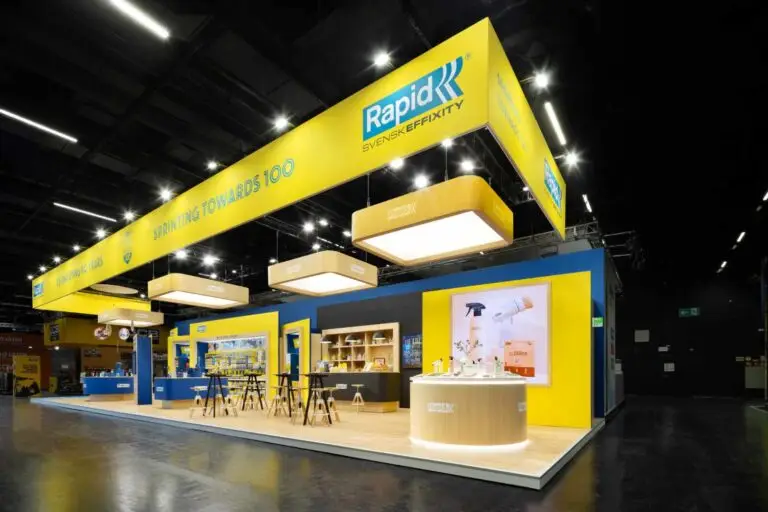
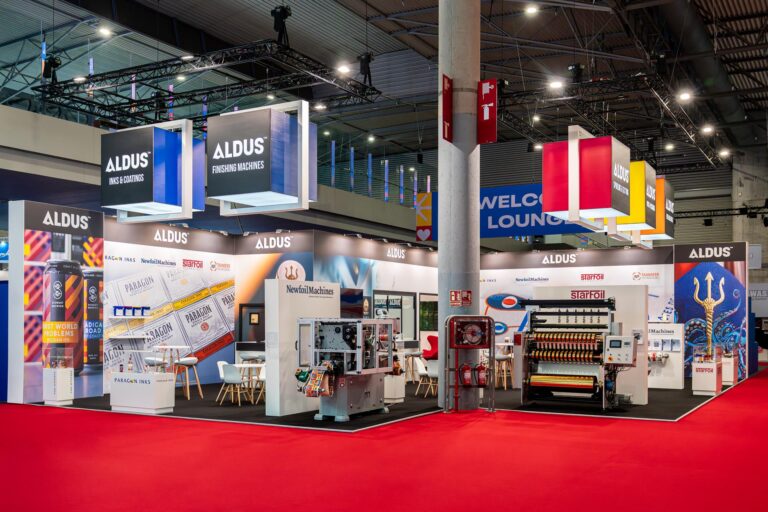


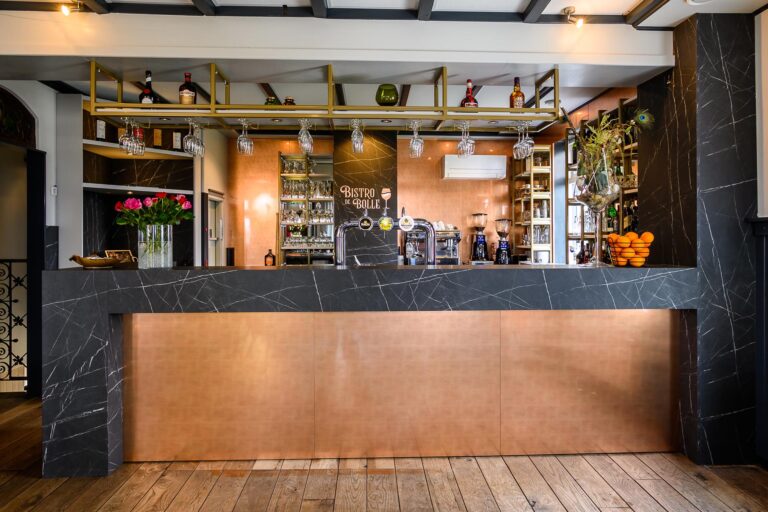


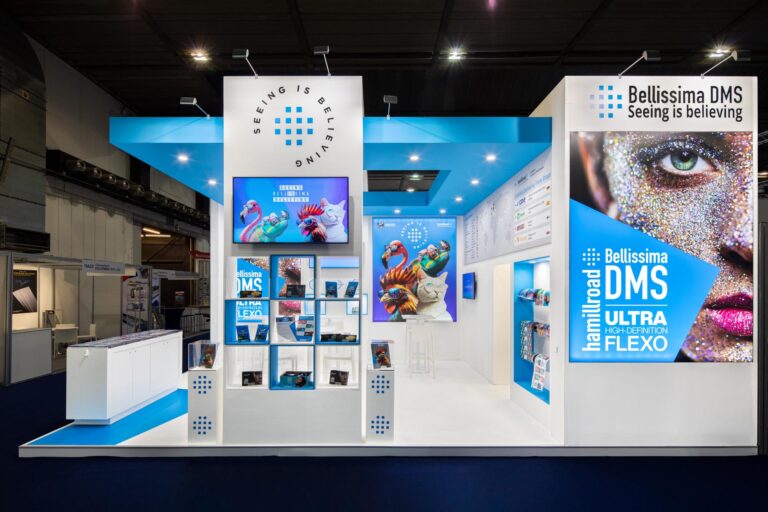








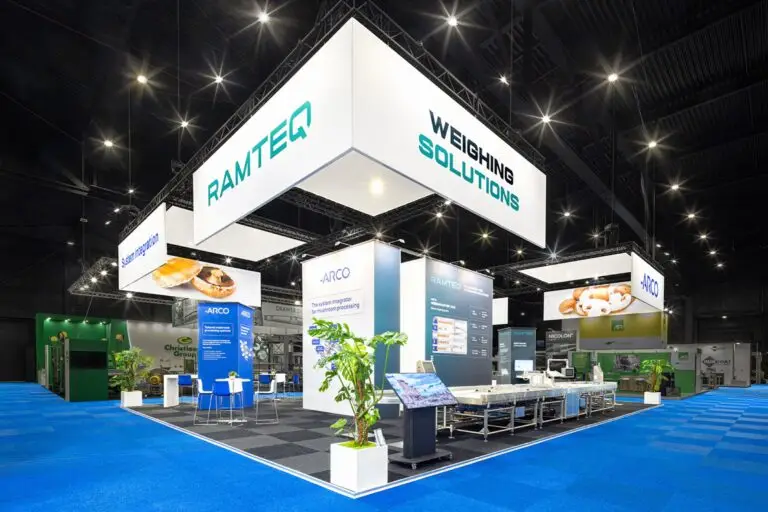

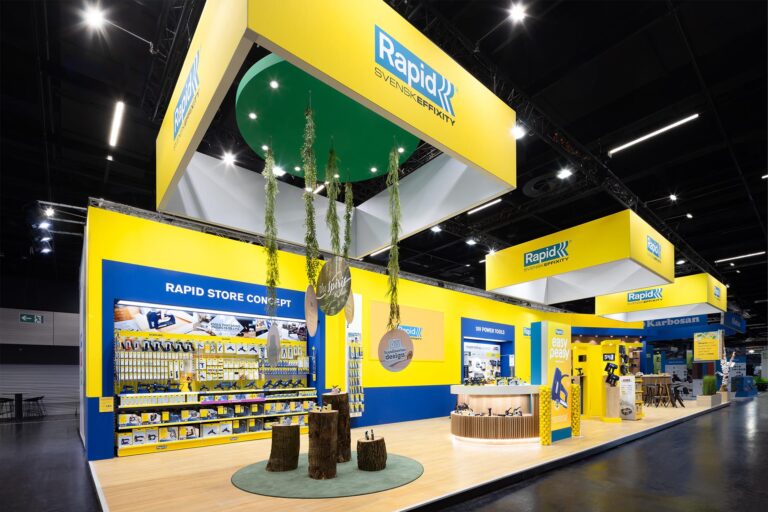
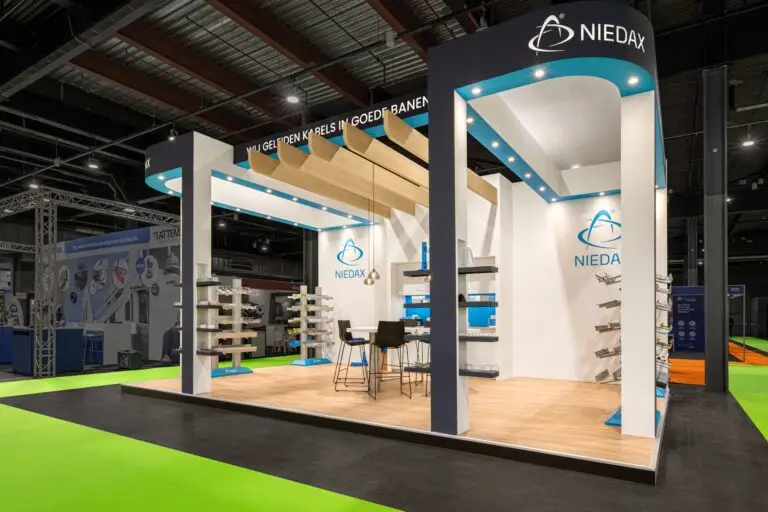
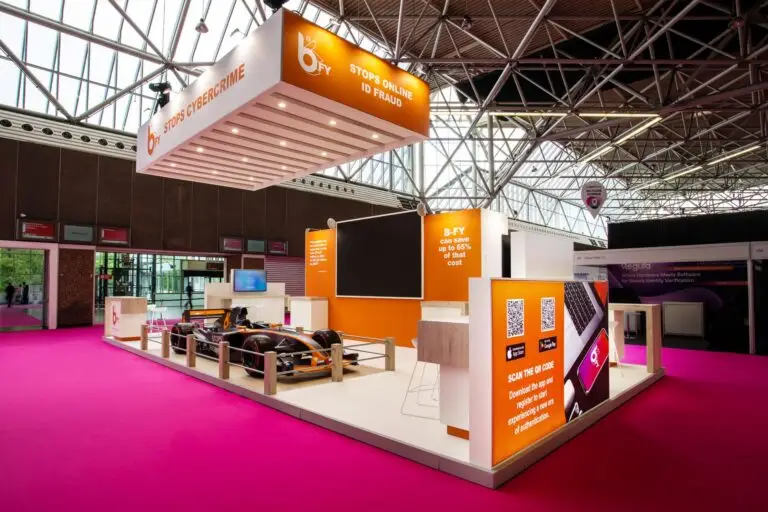
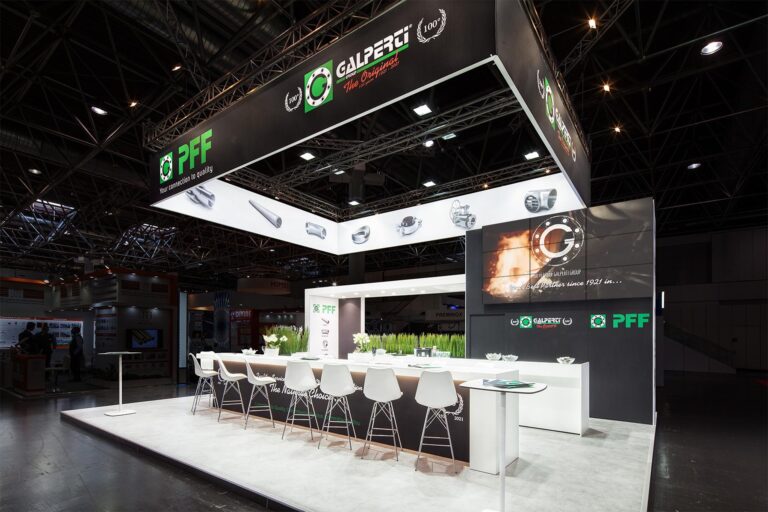
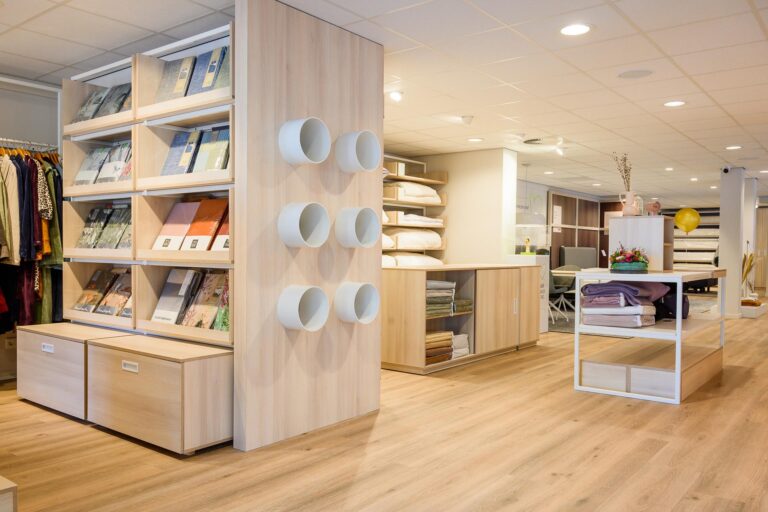
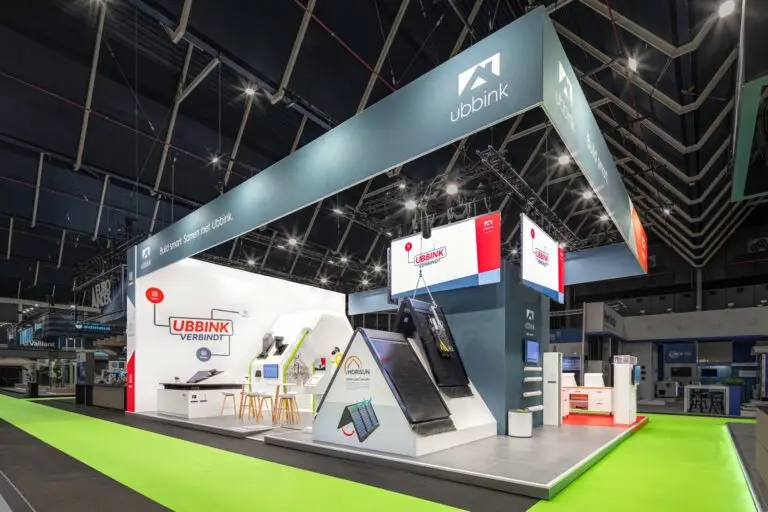
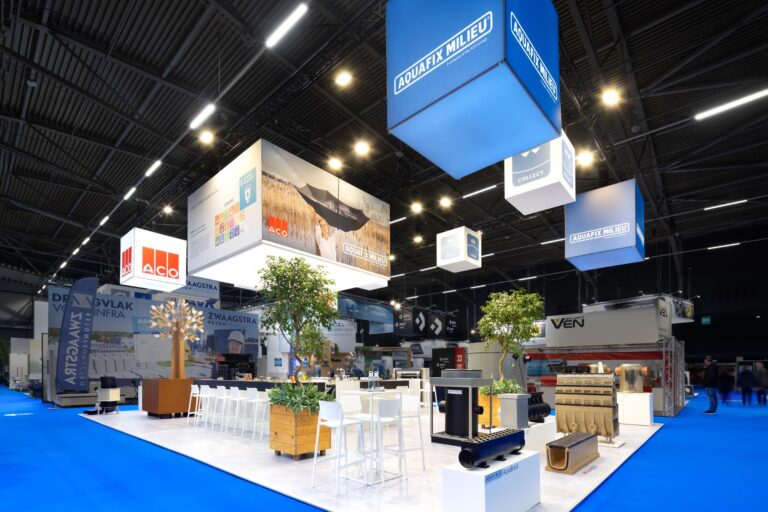
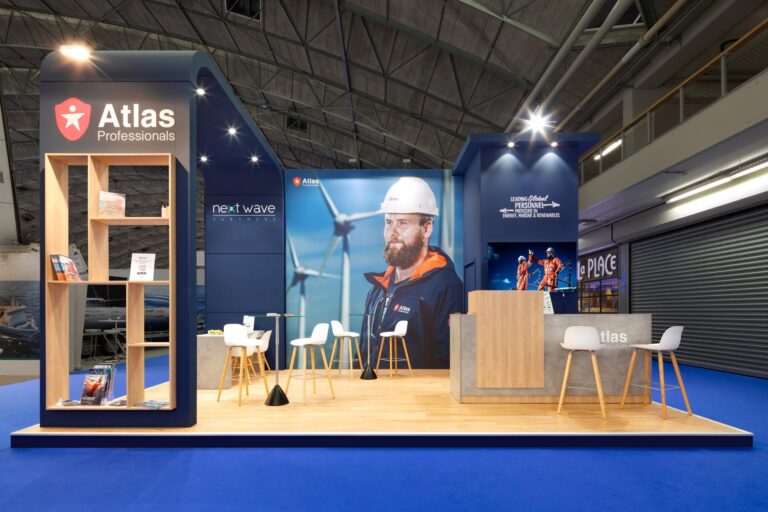
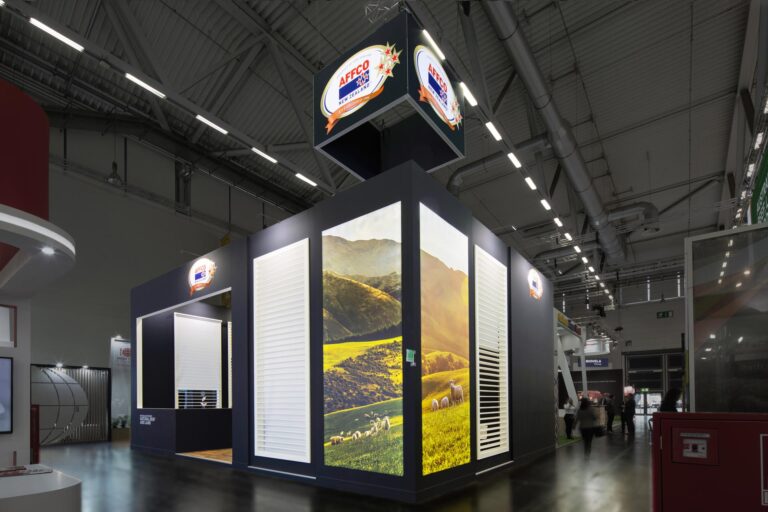
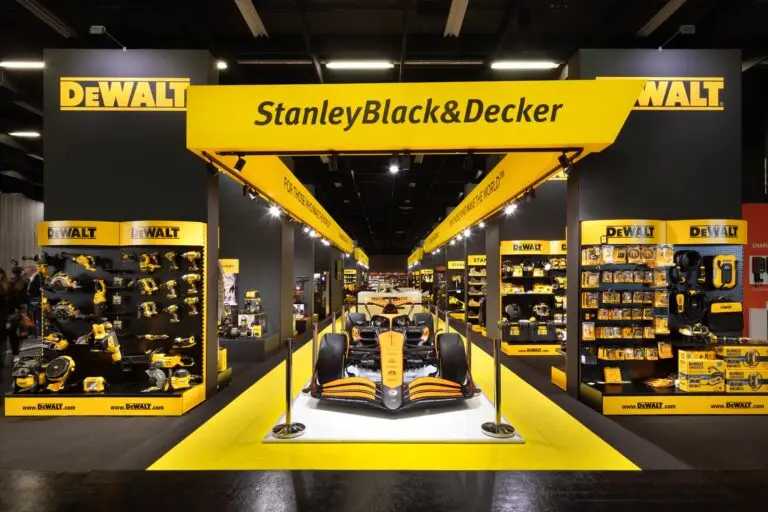
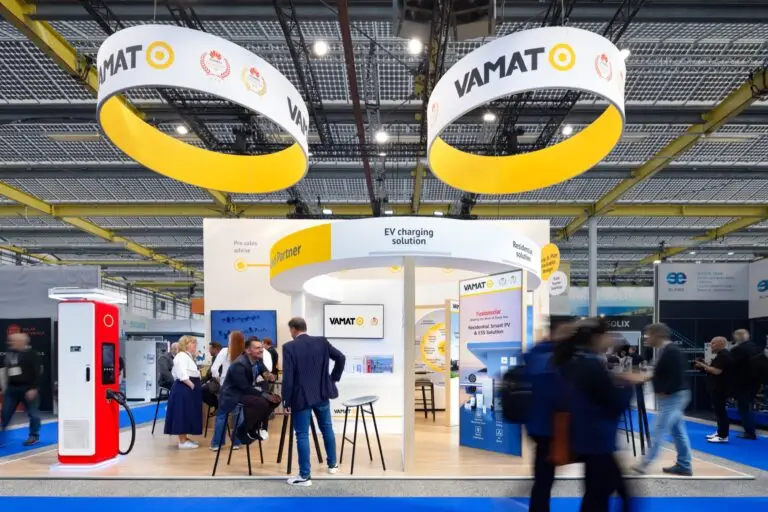
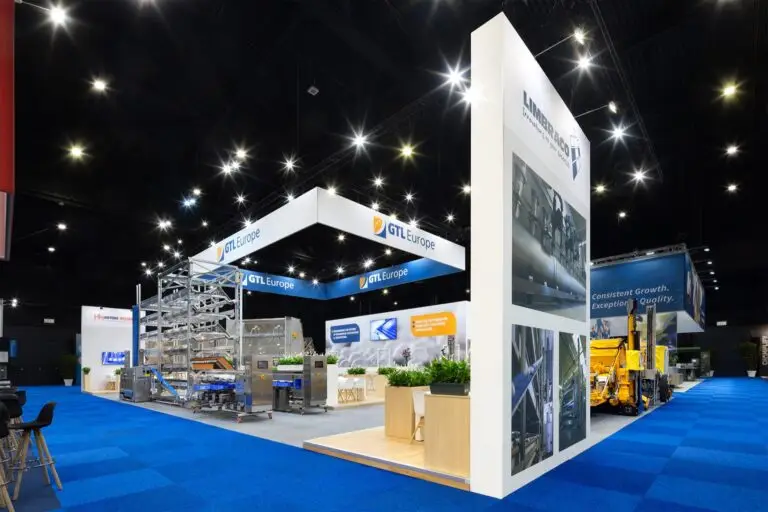
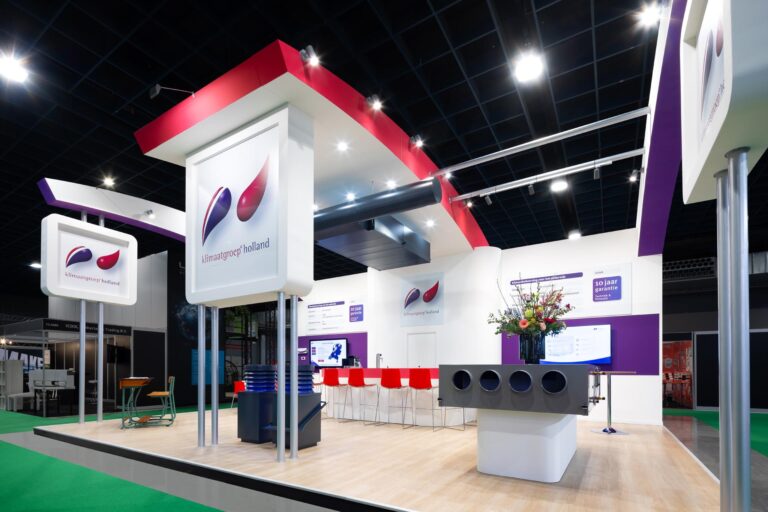
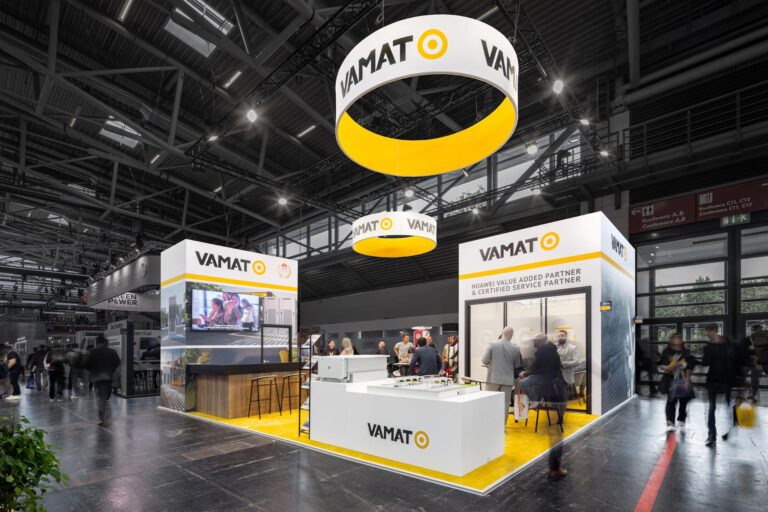
Is renting an exhibition booth more sustainable than buying one?
Renting is more sustainable if you exhibit at a trade show no more than twice a year and don’t have fixed booth dimensions. Buying (or having one built) is more sustainable if you attend three or more trade shows a year, design a modular booth, and arrange for professional storage. The key lies in reuse: the more often you use the same materials, the lower the environmental impact per trade show.
Renting: The Pros and Cons
When renting, the rental company reuses materials across multiple clients. That sounds efficient, but you have less control over material selection and sustainability certifications. Moreover, a rented booth rarely feels like a true brand experience: the design is generic, and the look doesn’t specifically align with your brand. For brands that use their trade show participation to start conversations and generate leads, this drawback carries significant weight.
Buying or Building: The Benefits
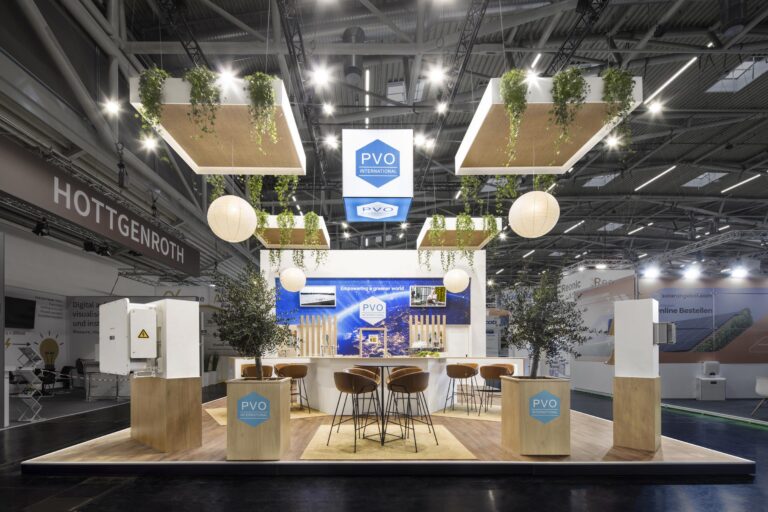
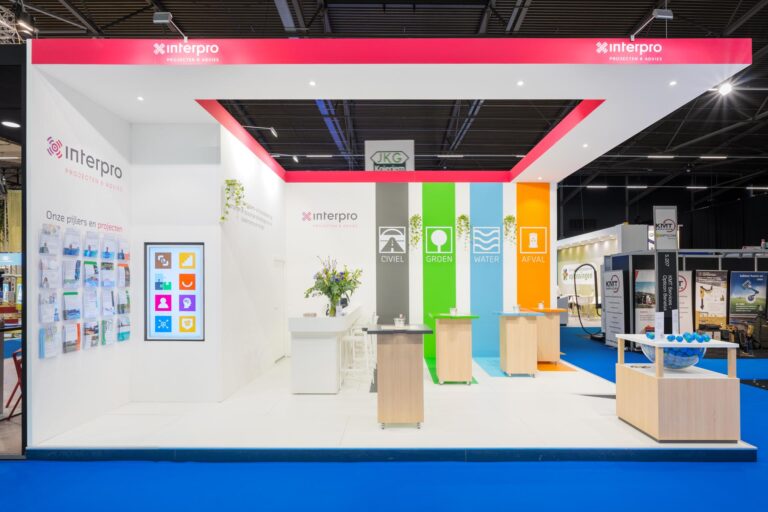
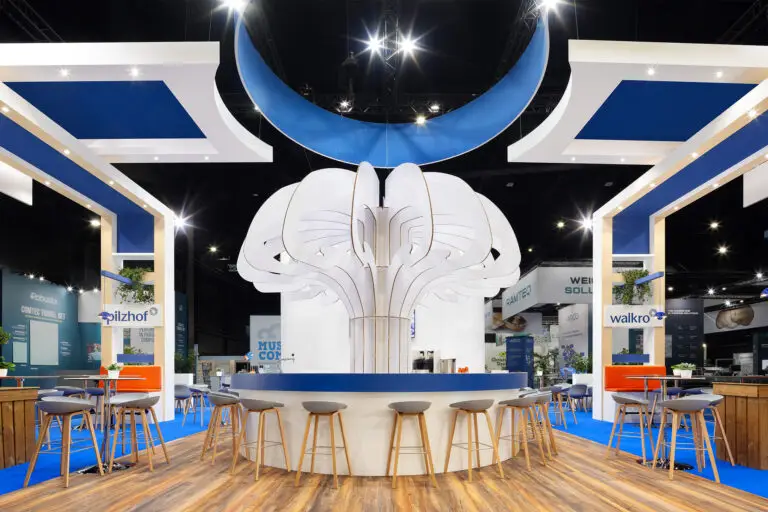
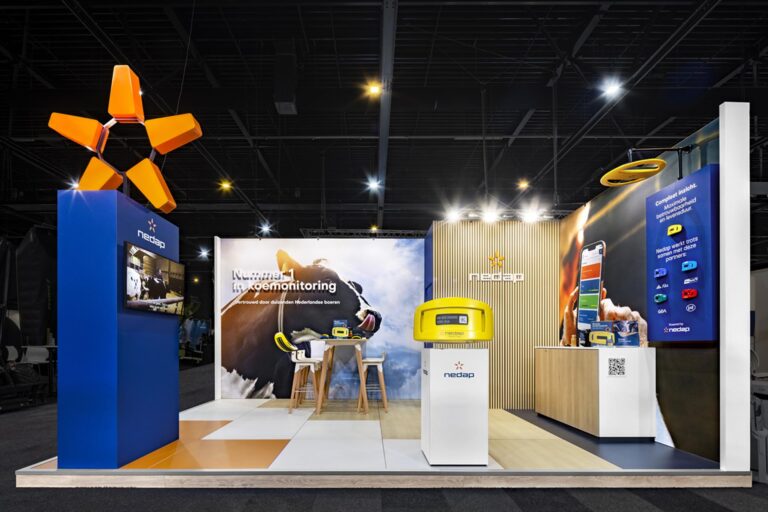
With a custom booth, you decide on the materials, the modularity, and the reuse plan. You build a booth that brings your brand to life and that you can use for ten trade shows. You choose FSC-certified wood, PET-recycled carpet tiles, and LED frames that you can reconfigure for each trade show. Every subsequent trade show becomes more affordable and more sustainable.
The best approach for most brands: have a modular, custom booth designed and built. Store it professionally between trade shows. Adjust the configuration and graphics for each event. This way, you combine brand impact with sustainability and keep costs per trade show predictable.
This is exactly how we work at HEKO Projects. From the very first meeting, we consider reuse, modular construction, and professional storage in our own workshop. We manage the entire process: from design and production to transportation, assembly, disassembly, and storage. This way, you get a booth that stands out at every trade show, becomes more sustainable with each event, and brings your brand to life—all without you having to worry about the execution.