


What everyone budgets for and what is actually paid
Most trade show budgets start with two figures: square meters and design. Those are the items you typically request a quote for. In the Benelux, the cost per square meter at trade shows varies. The averages are so widely spread that it’s difficult to give specific figures.
Exhibition organizers charge registration fees, mandatory contributions, and a range of extras separately, and the exhibition hall sells virtually every amenity individually. This isn’t a trap set by the organizers; it’s simply how the model works: every exhibitor needs different equipment, so everything is listed on a separate price list. Anyone who doesn’t review that list alongside their design in advance will discover it during setup.Items that are rarely included in the initial budget
The bill at your table breaks down into four categories, all of which are predictable as soon as someone points them out.
The exhibition floor itself
Electricity and its usage, water and drainage if you have a pantry or demo area, internet with enough bandwidth for your demos, flooring, hoisting and lifting equipment for heavier elements, fire safety inspections, parking passes for your team, and waste disposal after the project is completed.
Taken individually, each item may seem modest, but when added up, they end up costing more than the design budget you spent so long negotiating. Even exhibition stand builders now explicitly point to these additional costs as the items that participants tend to overlook.
Logistics and Time
Transportation to and from the event, setup hours within the time slots assigned by the venue, teardown often late into the night, and lodging and travel expenses for the staff who need to be there. For international trade shows, customs paperwork, longer travel times, and local regulations are added to the mix. Missing a time slot in a crowded venue costs money that you’ll never recoup, and that’s where the greatest risk lies.
After the trade show
A booth that ends up in a container after dismantling, with no plan for its future use, is an investment that paid off only once. Storage costs money, but a booth that you cleverly reuse for two or three editions—and redesign for each trade show—significantly reduces your costs per participation. That’s why we build using modular, sustainable materials and reusable components, and handle storage between editions. The second trade show then becomes not a completely new investment, but an adaptation of what’s already in place.
The fourth item does not appear on any invoice and is often the most expensive:
Your own team's hours
Do you manage five contractors for design, construction, engineering, transportation, and setup and teardown? Then, in the weeks leading up to the trade show, you’re essentially the project manager. Every coordination issue, every drawing that doesn’t match the hall requirements, every phone call on setup day comes to you. No one budgets for those hours, but they’re definitely taken out of your marketing calendar.
Never calculate your trade show budget by item, but by participation. Booth rental, construction, technology, logistics, staff, promotion, and storage together make up the amount you must account for to your management.
Erwin Kocken
The real hidden cost is the high price of invisibility
You can identify all of the items listed above in advance. There is one cost item that you’ll never see on a statement, and it’s almost always the largest: a participation that yielded no results.
Being present at a trade show isn’t the same as being noticed. An approved rate per square meter and a booth that’s set up on time give you a pleasant sense of control. But if visitors walk past your booth in four seconds without getting a sense of what your brand stands for, you’ve paid the full bill for nothing. In that case, it wasn’t just your electricity costs that were too high—your entire participation was too expensive.
A booth that’s just sitting there doesn’t mean anything. A visitor who stops by and strikes up a conversation—that’s a win.
Erwin Kocken
The first response is often to go bigger or use more high-impact elements: a larger screen, a bright color, extra hostesses. That puts a strain on the budget, but the problem remains.
Visitors don't walk right past your booth because it's too small; they walk right past it because your story isn't tangible.
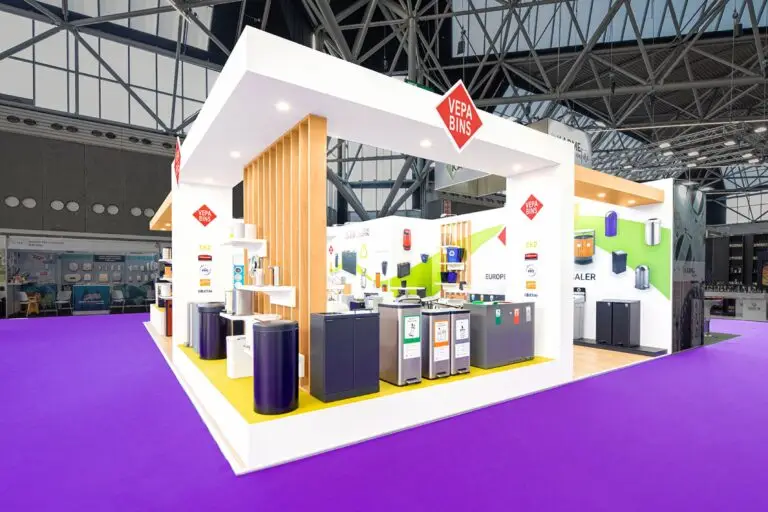
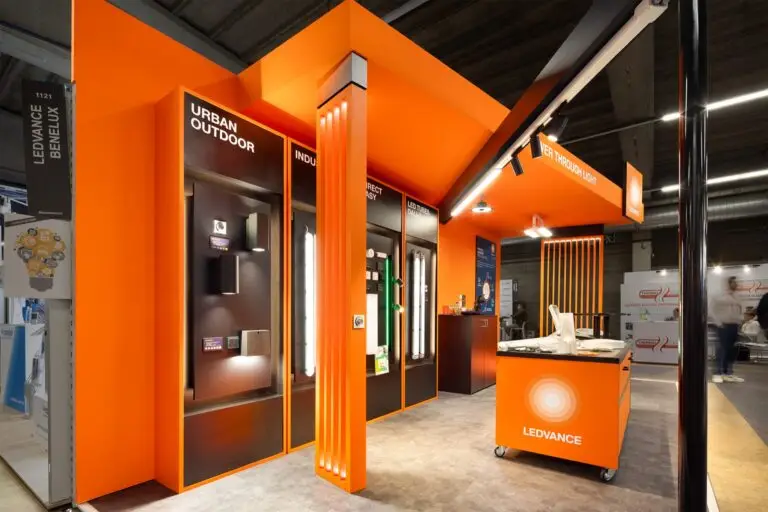
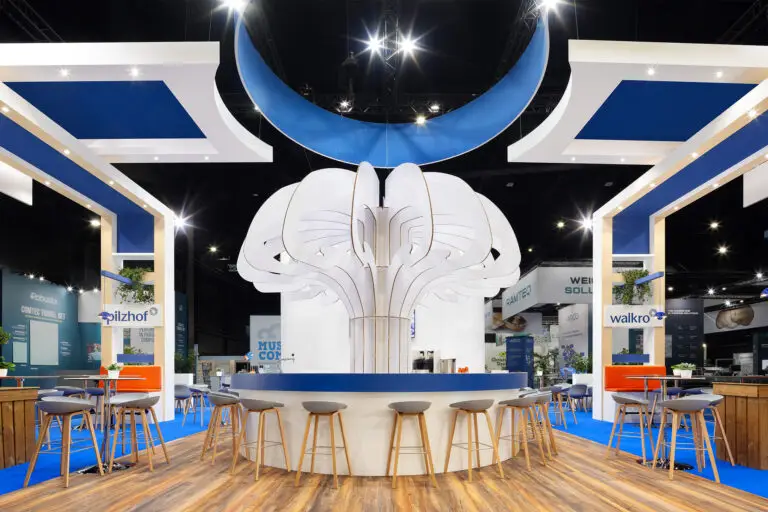
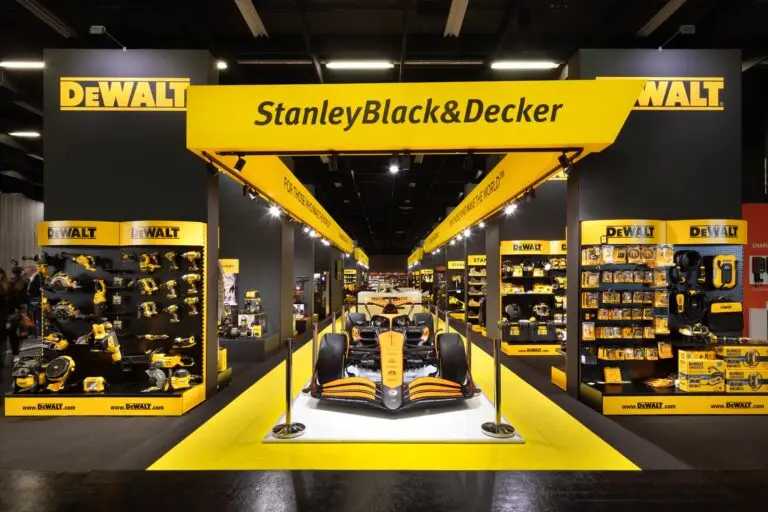
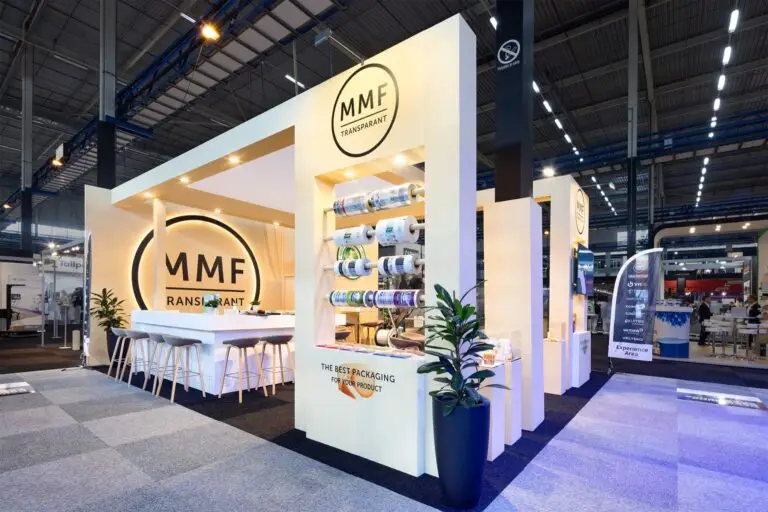
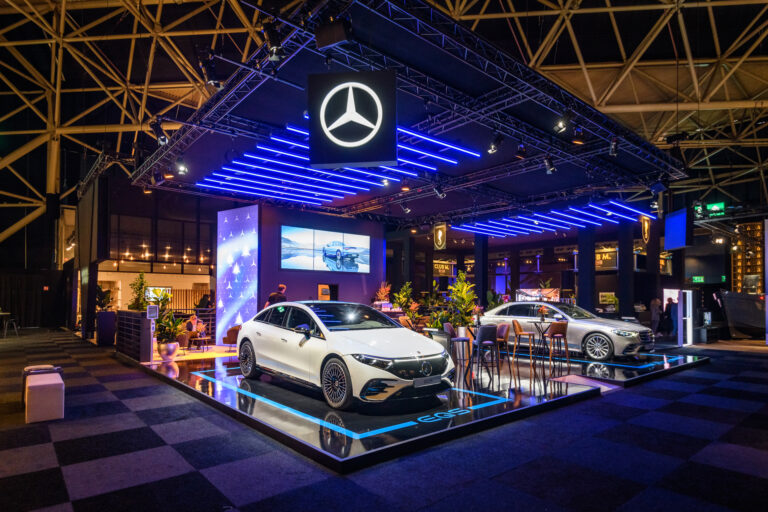
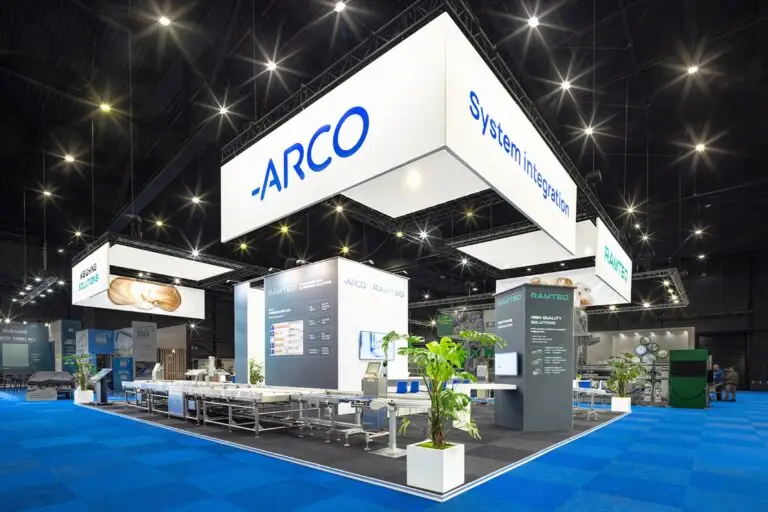
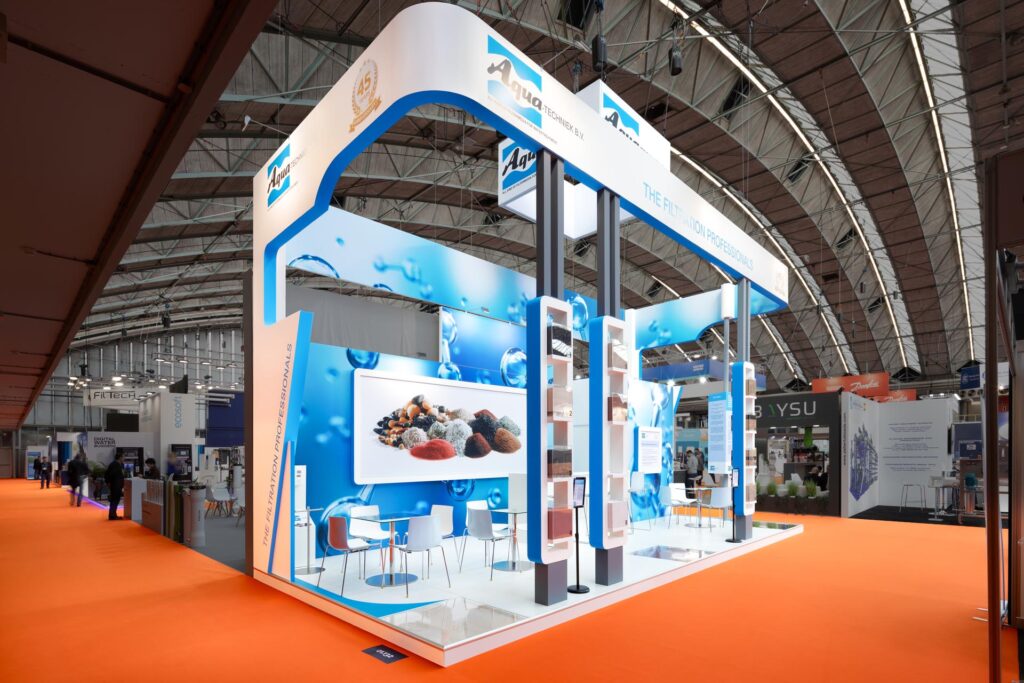
What does work: a concept that starts with your brand and your target audience, featuring a clear conversation starter, a logical flow, and material choices that align with what you promise. Detail trumps size. We see this time and again in our workshop in Druten with every project: it’s not the number of square meters that determines whether someone stops to look, but the finish, the lighting, and the height of a counter.
Check out our work in the portfolio. That illustrates our point more quickly than three more paragraphs of explanation.







Individual suppliers or a single coordinating partner: where control makes all the difference
There are two ways to organize a trade show participation, and they result in a completely different budget breakdown.
| Manage 4 to 5 suppliers yourself | One partner with full management | |
| Budget certainty upfront | Partial quotes that you have to add up yourself; engineering and logistics are handled separately later | A single total budget that already includes construction, transportation, technical services, setup, dismantling, and storage |
| Points of Contact | A different party for each component, and the gaps in between are your problem | One project manager who oversees the entire process |
| Problems on Setup Day | You make some calls to find out who’s in charge | It gets resolved on the floor; you find out about it afterward |
| Scheduling and Time Slots | Each supplier has its own lead time | A single schedule tailored to the warehouse requirements and time slots |
| Next issue | Parts are scattered or unusable | The setup is saved and reused, reducing the cost per entry |
| Internal hours | Coordination takes you weeks | Coordination takes up your time for coordination meetings |
The column on the right isn't necessarily the lowest invoice, but it is the most accurate. The total budget shows the amount you'll ultimately pay, and that's what you need if you have to justify something internally.
Five Questions to Ask Before Setting a Trade Show Budget
These questions will reveal your hidden costs—all in one conversation. Ask them in this order: the first question often sets the tone for the rest.
- What is not included in this quote? Be sure to ask specifically about transportation, setup time, takedown, technical equipment, inspections, and waste disposal. A company that oversees the entire process will answer those questions right away.
- Which services does the organizer purchase separately, and who handles the request for them? Electricity, water, internet, and hoisting equipment almost always run through the hallway. Someone has to submit that request on time. That rarely happens on its own.
- What happens to the booth after it's taken down? No response? Then you'll have to pay the full investment again next year. Ask about modularity, storage, and reuse.
- Who will be in the hall on setup day, and what is their role? The name of the project manager who resolves problems on-site is worth more than three pages of terms and conditions.
- What is the goal of this participation, and how will we know when we've achieved it? The number of high-quality conversations, specific accounts at the table, a product launch that leaves a lasting impression. Without that goal, you can’t evaluate a cost, because you don’t know what you’ll get in return.
These questions will take you half an hour. They’ll save you from having to explain later why “the booth” ended up costing three times as much as planned.
Grip is not an accounting issue, but a design choice
The two problems discussed in this article stem from the same source. Those who break their involvement down into separate parts lose track of the budget and the coherence of the brand narrative. Those who start with the goal and the brand—and from there design, produce, transport, and build—keep both under control.
The choice of materials then becomes a narrative choice, and planning becomes part of the quality rather than a risk.
Since 2001, we’ve been providing these services for more than 200 brands, both domestic and international, from the initial sketch through to final assembly and storage. Not because it’s impossible for you to handle it yourself, but because it would take you weeks—weeks that you’d rather spend on your trade show goals and your team.
You shine; we'll take care of the rest.
Do you want to know exactly what to expect before setting a budget? Send me the trade show, the hall, and the number of meters. Then we’ll work together to map out your complete trade show budget, including everything beyond the booth.